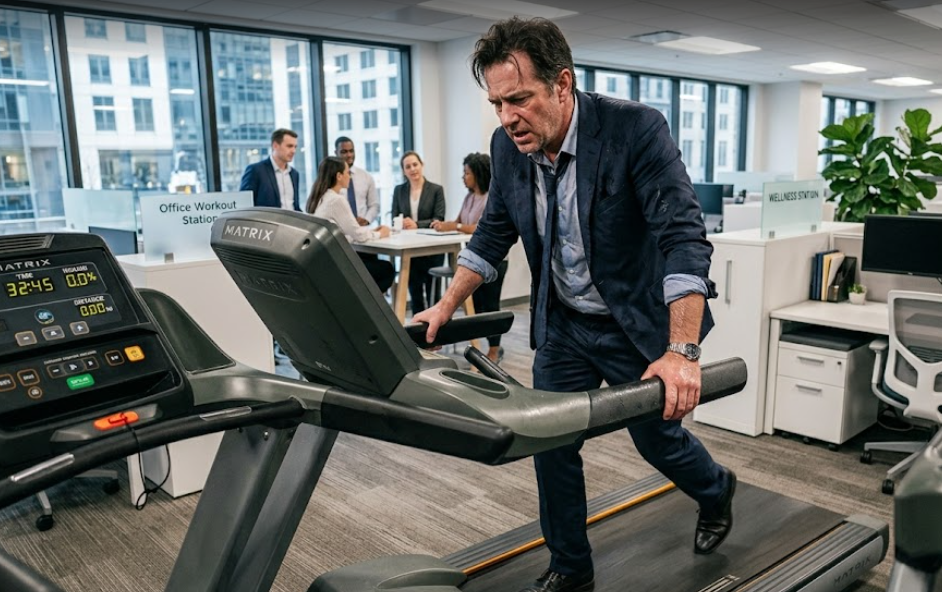
On paper, the modern Australian economic story is a masterclass in resilience. Judged by our preferred metrics, we have fully earned our moniker as the Lucky Country, routinely dodging the worst global financial storms of recent decades.
There’s a lot to be thankful for. And there are few other places most of us would choose to live.
But that doesn’t mean we can’t have a whinge!
It’s not inconsistent to be deeply grateful for our good fortune while simultaneously lamenting our shortcomings. Life is rarely all one thing. And while it is true that things could always be worse (a lot worse, in fact), true success is best measured against potential rather than mere results. You would rather see your child score a C on an exam knowing they gave it everything they had, than watch them coast to a B without trying at all. The former is a triumph of character; the latter is just a waste of talent.
The tragedy of the modern Australian economy is that we have mistaken our good grades for success. Ignoring that we could, and absolutely should, have done even better, and that the very tests we use to measure ourselves are barely relevant to begin with.
Yes, it’s true that, as a nation, we have largely avoided a recession for over thirty years, with our brief and shallow brush with Covid being the lone exception. At least, that is, according to the standard definition of two consecutive quarters of negative GDP growth.
Still, technical definitions resting on aggregate metrics are entirely unhelpful to the ordinary person. To a family sitting around a kitchen table, a recession is not a data point from the ABS or a declaration from our central bank. And neither is it as specific as being unemployed or showing reduced spending.
Rather, it is something more general, like simply struggling to “get ahead.” A reduced prosperity, where we have to work harder and longer for things that were once easier to come by. And for a significant, quietly desperate portion of the Australian population, that backward slide has been happening for a very long time.
You could point to a dozen different metrics to make the case, but perhaps the most telling indicator of all, even if it is some way downstream of economic malaise, is the unmistakable rise of political populism. A comfortable, prosperous people with hope and opportunity just don’t tend to embrace the radical.
But even by more standard measures things are clearly moving in the wrong direction.
Just as any share investor understands that profit per share for a company is far more important than total profit, the only rational way to view GDP is on a per person basis, dividing the national output by the actual number of people sharing in it. And when viewed through that lens you see an economy that has contracted in nine out of the past eleven quarters.
The national economy is “expanding” only in the sense that consumption has been boosted by rapidly importing more people. (The use of quotation marks being a very deliberate attempt to imbue as much sarcasm and sass as possible to the term, because it’s only true if you think growth means increasing raw transaction activity while remaining completely blind to productive capacity, long term sustainability, or the actual quality of that spending. But that’s a grievance for another day.)
You also see a lot of misery hidden within aggregate numbers.
Averages can be dragged higher by increasing prosperity at the top, even while things go backwards at the bottom. It’s the classic “K-shaped” economy which is something of a shared experienced across much of the west. And the delineation is pretty easy to define; you either have assets or you don’t. Everyone suffers from higher fuel and grocery prices, it’s just far less of a thing if your house price and portfolio value are headed to the moon.
The standard pushback here is that, despite some negatives, average wealth for the average Aussie has risen significantly over the long term. Sure, things move in cycles, but the general trajectory has been up and to the right. And that is true over very long periods of time.
Those on the lowest rungs of our economic ladder may enjoy luxuries J. D. Rockefeller could only dream of, but that’s a rather tepid consolation to families whose lived experience is getting harder year to year. Besides, it speaks far more to technological advancement than competent economic management.
Pointing to the fact that you can buy a TV a lot cheaper (and better) than you could 30 years ago as evidence of prosperity just seems shallow. Especially when essentials
like housing and energy have gone very much in the other direction.
Housing is, in fact, the biggest tell that something is off.
You can mount the argument in a variety of ways, but measuring it in the only currency that ultimately matters is perhaps the clearest demonstration. No, not bitcoin, but time. How much of a finite human lifespan must be sacrificed to secure a home? Thirty years ago, an Australian worker needed to commit roughly 8,000 hours of labor to buy the average home. Today, they must surrender roughly 20,000 hours of effort for that exact same property.
Another good bit of signal is the proportion of Aussies who survive week to week without any real financial cushion in the form of saving or investments. In the mid-90s that was about 1 in 6 households. Today it’s 1 in 4.
Is that what increasing prosperity looks like?
The worker of the past may not have had an iPhone and Netflix subscription, but they possessed a greater abundance of leisure, which is the ultimate, if not quietest form of prosperity. The argument that we are wealthier today is only true if you choose to value cheap plastic and digital novelties over time, autonomy, and basic stability.
There’s no easy solution, let alone a politically palatable one. But we can at least do our best to protect ourselves and our loved ones by seeking shelter in assets. Indeed, though it’s grossly unfair, those with the means to acquire quality assets can even benefit from ongoing debasement and various forms of artificial stimulus. Even if we should probably expect less favourable treatment from the tax man in the years ahead.
But a good rant every now and then is somewhat cathartic too.
Anyway, apologies for the Saturday morning negativity. If it’s got you down, go and “touch some grass”, as the cool kids like to say.
Or, as Wendell Berry would put it:
When despair for the world grows in me
and I wake in the night at the least sound
in fear of what my life and my children’s lives may be,
I go and lie down where the wood drake
rests in his beauty on the water, and the great heron feeds.
I come into the peace of wild things
who do not tax their lives with forethought
of grief. I come into the presence of still water.
And I feel above me the day-blind stars
waiting with their light. For a time
I rest in the grace of the world, and am free.
Strawman is Australia’s premier online investment club.
Members share research & recommendations on ASX-listed stocks by managing Virtual Portfolios and building Company Reports. By ranking content according to performance and community endorsement, Strawman provides accountable and peer-reviewed investment insights.
Disclaimer– Strawman is not a broker and you cannot purchase shares through the platform. All trades on Strawman use play money and are intended only as a tool to gain experience and have fun. No content on Strawman should be considered an inducement to buy or sell real world financial securities, and you should seek professional advice before making any investment decisions.
© 2026 Strawman Pty Ltd. All rights reserved.