There’s no better affirmation of our investment genius than watching a stock shoot into the stratosphere after purchase. It was all so obvious! It just took some time for the market to catch up to what you saw so clearly.
But was it really that obvious? Unless you took a significant position — which is the only real attestation of conviction (or, to be fair, recklessness) — you’re almost certainly guilty of overstating the certainty you felt at the time. And even if you did bet big, unless the stock moved for the exact reason you predicted, you’re probably just rewriting history to flatter yourself.
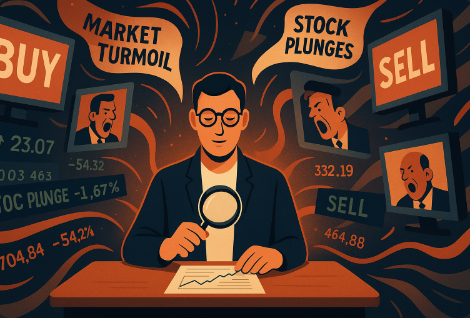
By the same token, a plummeting share price tends to be less about you being wrong, and more about you being unlucky, or events unfolding in a way that was somehow unfair and unpredictable.
Whatever way reality unfolds, the one thing your ego will make sure of is that you take all the credit for the wins, and none of the blame for the losses. It’s a massive cognitive trap that all of us are susceptible to.
Market strategist Michael Mauboussin, whose writings are very much worth your time, advocates a simple but extremely effective remedy:
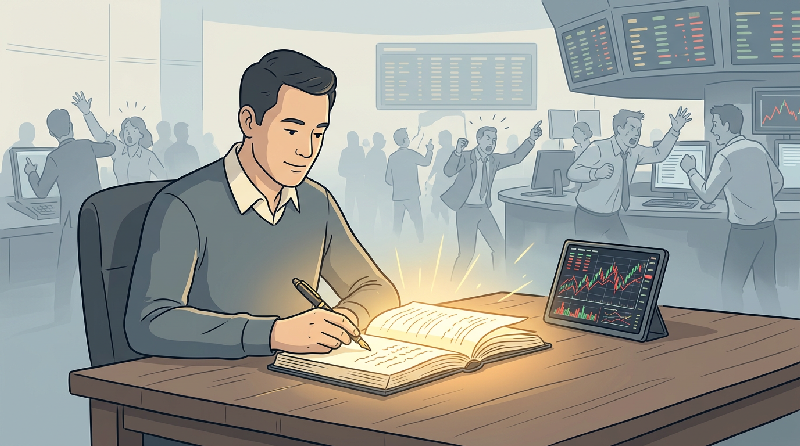
“Here’s what you do. Go out and get a notebook. When you are making a consequential decision in your portfolio, business, or life, write down what you expect to happen, why you expect it to happen, and attach probabilities to your views. If you are so inclined, also jot down how you feel physically and emotionally. Make sure you note the date and time.
This practice is valuable because it mitigates some common cognitive traps. The first of these is hindsight bias, the sense that you knew what was going to happen, before the event occurred, with a greater probability than you actually did. Creeping determinism is a related trap. This is the name for the sense that what happened was inevitable. In both cases, your mind draws out the facts around an event that occurs and weaves a narrative to explain the result. You do this unconsciously and effortlessly. Knowledge of the outcome and the facts behind it bleed into your memory, and you start to believe that you knew more than you did.”
— Michael Mauboussin
This isn’t an original idea. Many of the world’s best investors advocate the same thing.
George Soros kept a meticulous diary of his thoughts and investment theses as they happened (which later became a book, The Alchemy of Finance), because he wanted to show how his ideas were constantly being tested and adjusted. He knew that without a written record, he would just rewrite history to feel better about his missteps.
Ray Dalio, founder of Bridgewater Associates, turned the practice of documenting decisions into a corporate religion. He argues that the secret to progress is a simple formula: pain plus reflection equals progress. If you do not write down your thoughts when you are in the trenches experiencing market volatility, you lose the raw data of your own mind. You forget the fear, you forget the uncertainty, and you completely miss the chance to learn from your mistakes.
In fact, it’s kind of core to how Strawman was designed — and is the key idea behind ‘Straws’: discrete research notes that help support a thesis. Something you can refer back to, to see the merits of your reasoning, and to test whether the basis for holding still stands.
It’s not just about having a record either. The very act of writing your reasoning down will force you to crystallise your thoughts more clearly. And because you know others will read it — and maybe even comment on it — you’ll almost certainly be more careful than you would be if it were for your eyes only.
It’s not a comfortable thing, and plenty of Strawman members tend to be nervous to put it out there. Which is perfectly understandable; we’re all one bad day on the market away from looking like an idiot in front of our peers. But as one member said to me recently: what’s worse — looking “silly” or losing money? When you can park your ego to one side, we should be grateful to anyone who splashes cold water all over a treasured investment idea. They may just have helped you avoid a terrible loss.
Dalio calls this process “thoughtful disagreement”:
“Your goal is not to convince the other party that you are right — it is to find out which view is true and decide what to do about it. Find the smartest people you can who disagree with you and try to understand their reasoning. You learn a tremendous amount and that raises one’s probability of being right.”
— Ray Dalio
The hesitation to post your thinking often stems from the fear that it isn’t smart enough. But there is very often sophistication in simplicity. The “good business at a sensible price” justification doesn’t need to be a 5,000-word report. Indeed, the more verbose an investment thesis, the more complicated it is, and the more that can go wrong.
Simple is fine. Short is fine. Just so long as it is reasonable, honest, and falsifiable. That way, in the future, when your ego is doing all kinds of mental gymnastics to ensure your perfect self-image remains unscathed, you can see the past more clearly — and better learn from it.
Strawman is Australia’s premier online investment club.
Members share research & recommendations on ASX-listed stocks by managing Virtual Portfolios and building Company Reports. By ranking content according to performance and community endorsement, Strawman provides accountable and peer-reviewed investment insights.
Disclaimer– Strawman is not a broker and you cannot purchase shares through the platform. All trades on Strawman use play money and are intended only as a tool to gain experience and have fun. No content on Strawman should be considered an inducement to buy or sell real world financial securities, and you should seek professional advice before making any investment decisions.
© 2026 Strawman Pty Ltd. All rights reserved.