Consensus community valuation
27 May 2026
$0.85 ($0.60 - $1.20)
... note all numbers below are $NZD = A$0.82. Valuation has been converted to $A.
Following the FY26 webinar yesterday, I've had a go at an updated valuation for $ARX. The cost structure of the business looks pretty stable over several years, and so rather than representing a true assessment of the uncertainties (risks and upsides), I've built more of a BASE case model for one revenue scenario.
1. The Revenue and Sales and Marketing "Engine"
The following table is the heart of the valuation, and I'll briefly explain my thought process below. Apologies if it is too granular for the appetite of most.

Everything in green is historical data, insofar as I've been able to extract from accounts and presentations. I consider each product in turn:
- Myriad
- Endoform
- OviTex
- Symphony
Remember, what follows is one scenario only, and further down I describe some of the alternatives around it.
Myriad
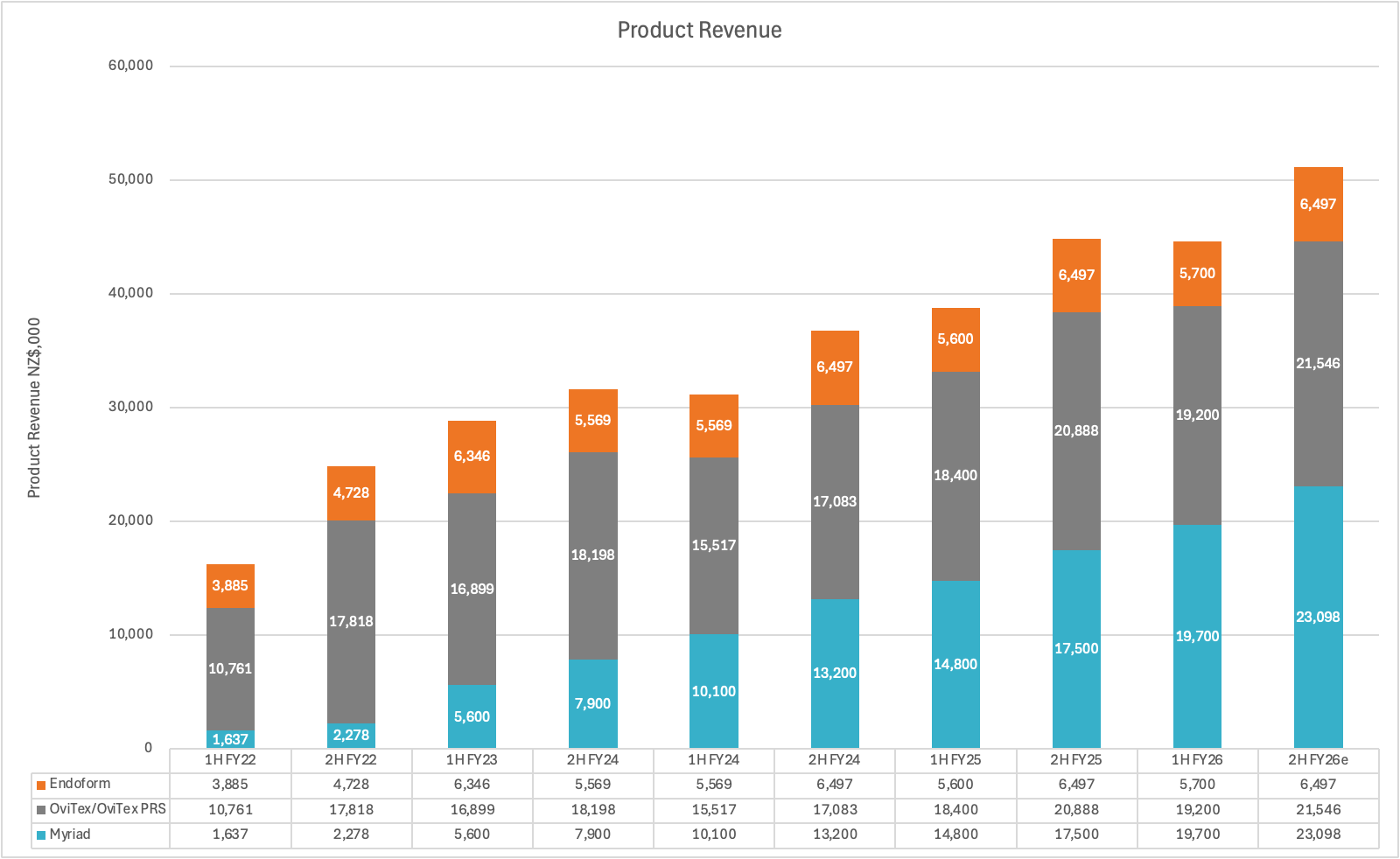
The core growth driver. This builds on the detailed # customer accounts/ salesforce data presented yesterday. Impressively, we can see that sales per rep has grown rapidly to $NZ1.01m p.a. As the sales force scales from 49 (FY26) to 109 (FY31), that requires the steady addtiion of 12 reps per year. (Brian says they'll add 10-15 this year.) Rather than $sales/rep continuing to grow, I hold it flat for a couple of years, before rising gradually to NZ$1.30, which can either be driven by increased sales per account or modest price increases. The projection sits squarely in line with i) commitment to spend $5m on Myriad sales and marketing nextyear and expectation to grow sales force to over 100 over 3-5 years. So it is grounded in management's plans. (Note that the projected FY31 hospital accounts of 848 triangulates well with $PNV's current level of 800.)
As a result, Myriad sales growth averages 23% p.a. over the next 5 years. This should be very doable, and there are arguably futher upside cases.
Endoform
I'm not really sure where this is going, as sales have been pretty flat for 6 years. I assume it starts to decline (being supplanted by Symphony) and ends up at $7.0m by FY31, To be honest, I think it lies in the noise of what happens to the other products, so am not giving it further thought.
OviTex Range
While it is struggling to achieve strong growth in the US, in Europe TELA Bio indicates it is growing strongly, echoed by Brian yesterday. I won't repeat the discussion of this from yesterday's straw, but it is clearly an important product for TELA Bio, and they are pushing it in their licensed territories. TELA Bio are guiding 8% growth in FY26, so I believe it should continue to grow (given the ongoing body publications showing the clinical benefits and European traction). Keeping it simple, I have 6% p.a., and see this as undemanding --- providing TELA Bio doesn't fail altogether!
Symphony - The Wild Card
Who knows what to make of the positive story around this, and we'll need to await the published RCT later this Year. However, with management throwing $4m at it for a proper launch, and adding product variants, I have put a modest growth profile in of $2,0m / $5.0m / $10.0m / $15.0m / $20.0m out to FY31.
If the product is successful, we could see $50m (Myriad-like) performance in FY31. So for me, Symphony has a significant upside not reflected in the valuation. But it is early days.
Sales and Administration Expense
My simple model here is to take the FY26 number, add $7m per annum as incremental sales force, and then inflate the sum by 5% p.a.
This equates to SG&A growing by 14.6% in FY27 falling each year to +10.9% in FY31. So it seem a sensible allocation of resources.
All this generates the Revenue Line and the SG&A Expense line. In my view these are the big building blocks.
So there you go a sum-of-the-parts revenue and sales and marketing model.
2. The Rest of the Model
R&D: I step up the FY26 "fixed cost" of $7.9m by $2,0m for Symphony variants and de minimus Enivo development. Thereafter, R&D grows in line with revenue to be 10% of Revenue (average of 11% for last 3 years) which should allow for registration of Enivo and ongoing clincal trials.
D&A: Has averaged about 6% of revenue p.a. Projected at this level to FY31.
Capex: Base capex of $4.5m p,a, stepping up in FY29 and FY30 to $8m p.a., to allow for facility expansion to take capacity from $200m+ to $300m.
Financing Costs: assume zero, as no debt and interest on cash balances working capital facility
SOI: growing at 0.20% p.a. reflecting average of last 4 years.
WACC: Assumed to be 12% to reflect risks around i) TELA Bio ii) NZD:USD iii) liquidity. FY31 projections are discounted back to the start of FY27 at 12%. (You get significnatly higher valuations if using 10% - obviously - but I think $ARX warrants a high discount rate.)
3. Outputs
$A/share using $NZ = $A0.82
Method 1: Calculate FY31 EBITDA, and value at EV/EBITDA multiples

Method 2: Calculate FY31 EPS and apply PE Ratios

4. Risks and Upsides
OviTex:
TELA Bio runs out of cash. In FY25 TELA had Operating cash burn of US$28m, and remaining cash of US$50m. The picture in Q1 was OpCF of -$10m and about $40m remaining. So the burn appears ongoing.
Given debt arrangements, TELA appears a viable going concern for 12-18 months. Doubtless, $ARX will have contingency plans should TELA fail. Because OviTex has a completely diferent customer base than the rest of the product portfolio, IMO TELA would have to switch distributor or enter a direct model. Given its progress selling direct in the US, the latter could be an option.
However, whether going direct or switching distributor, the revenue disruption would be significant, and could be expected to bite for 2-3 years at least. No doubt, management are watching this,... closely.
For now, TELA remain incentivised to drive OviTex sales, as a matter of survivial.
Myriad: Myriad sales could significantly outperform my projections, which rely on a 5-year CAGR of 23%. My Base Case of NZ$141m in FY31 is only US$83m.
Symphony: As I've said, this is the wildcard. I assume FY31 sales of NZ$20m. But if it follows Myriad's trajectory it would get to NZ$50m, and even that is tiny share of what Brian thinks will be a reformed outpatient TAM of US$1 to $2bn. So, Symphony is the one to watch, and it will leverage the existing field force, which gives it a leg up!
Valuation Impact
I am reasonably comfortable given that $ARX is now profitable, that disciplined capital allocation means the downside risk is well-characterised. It would be hard to see this business now being worth much less than $0.40 to $0.60, most likely realised if TELA fails, Symphony bombs, and Myraid growth slows markedly. You can't rule it out as medical devices generally and dermal repair specifically are tough spaces.
However, the upside from here is interesting. If a few things go right it is also not hard to end up with scenarios valuing the business at $1.50 to $2.00! (i.e. stronger Myriad; early Symphony traction; OviTex sustains upper single digit revenue growth and TELA remains viable.)
The big issue that we discussed here yesterday is whether the market can see through the required investment in the sales force. Based on my modelling, it should be possible with disciplined allocation of resources for the business to grow profitably. And I consider that over the last 5-10 years, management have proven that they can do this.
I'll be interested to hear Brian Ward's perspective on how to balance the reinvestment of the growing available cash, with ensuring that EPS growth is also driven.
For now, I'm happy to have a 4.5% allocation (RL) and if the signs continue to be positive in the next two reports, I'd be prepared to continue to add.
Clearly, the market remains completely unconvinced!
Disc: Held
$ARX FY26 — A breakout year: the OviTex overhang is now explicit, and Myriad is firmly the key growth driver
Pre-amble
Aroa Biosurgery released their FY26 result this morning. Preliminary results were foreshadowed 4 weeks ago, and for those interested in further background I refer you to recent posts by @mushroompanda
Market response has been subdued in part due to the earlier release, but also what might be considered soft guidance and management indicating a significant step-up in US sales and marketing resourcing. I’ll address both.
@Strawman has arranged a further meeting with CEO Brian Ward, next Wednesday, so today’s results are a good set up for that meeting.
Headline numbers were strong and exceeded guidance on both lines, but the story is increasingly bifurcating between the directly-sold Myriad franchise (firing) and the partner-distributed OviTex line (structurally constrained, for reasons that got what I consider as an honest airing on the call). Symphony sits separately as a newly de-risked potential upside – not yet recognised by the market, not unreasonably given that management have yet to prove they can capture the opportunity presented by the disruption unfolding in the synthetic skin outpatient market, which Brian discussed in some detail on the call.
TLDR
FY26 represents a long-awaited breakthrough into profitability (cash and NPAT); however, the market clearly doesn’t believe an inflection point has been reached. Will reinvestment into US sales and marketing see a continuation of the operating leverage of recent years, where costs have been managed carefully? The norm for ASX-listed medical devices cracking the US is that this can be a hard slog. Or, are management being conservative in the guidance given, such that stronger-than-guided sales momentum more that offsets the expanding sales and marketing cost base?
FY26 vs FY25 — the headline numbers

The trend in key financial metrics is clear in the graph below.

Source: My analysis of Company accounts – numbers differ from management “adjusted” figures.
On a constant-currency basis, revenue of NZ$101.3m beat the top of the NZ$92–100m guide, and normalised EBITDA of NZ$11.3m came in at ~174% of the guidance midpoint of NZ$5–8m.
Direct sales are now 59% of product revenue (up from ~52% in FY25) and growing materially faster than the partner channel. $ARX’s destiny is increasingly in its own hands, a turnaround from a previous thesis breaker for me.
Operational highlights in the year include:
- Customer accounts grew to ~440 (from ~330) on a broadly flat sales headcount of ~49 reps — that's the operating leverage management have been pointing to, in numbers
- Symphony's randomised control trial (RCT) in DFUs met its primary endpoint (announced earlier, confirmed today, with further details to come on publication of the trial)
- GPO contracts secured across all major groups, covering >95% of US hospitals, but $ARX’s limited sales force footprint meaning that only a minority of these are being accessed today
- US tariff costs of NZ$1.6m absorbed cleanly; a contingent ~NZ$1.4m refund identified but not recognised (potential FY27 tailwind – good luck, join the queue!)
- Five consecutive years of revenue growth; Myriad alone has compounded from NZ$4m (FY22) to NZ$49m (FY26)
Key Drivers
Myriad has been the story for several halves now, and it remains so. +54% on a base that was itself +39% the year prior, sold by ARX's own reps into the hospital OR, with reported gross margins north of 90%. Trauma and limb salvage are the bread and butter.
Brian was explicit on the call when Matt Joass asked whether anything one-off had boosted growth — no competitor recall, no regulatory windfall, just sales execution against a TAM management now sizes at US$750m+. (Note: I’m not convinced that Brian was right here. Primatrix (Integra) and Myriad do overlap, as pointed out previously by @mushroompanda, and there is no doubt in my mind that $ARX has been a beneficiary of the protracted absence of Primatrix – as have the many other competitors. This is something to watch in FY27, now that PriMatrix is back!)
$ARX has invested steadily over the years in building evidence to support its marketing claims. For example, the MASTRR registry continues to grow the evidence dataset across multiple surgeons, with the 423-patient interim analysis due in FY27 Q2.
Separately, the longer-dated COVER RCT is worth noting. Myriad vs Myriad + NPWT (negative pressure wound therapy). NPWT is used in >1m procedures per year in the US. If the combination beats NPWT alone, that's a genuinely large new wedge for Myriad. Not in FY27, but in the pipeline.
Endoform's -6% is deliberate — management has been candid that almost no effort has gone into it for ~4 years while resources concentrated on Myriad. That changes now, because Symphony plugs into the same Endoform legacy: hospital outpatient department, which is literally the floor below where the OR team already calls. (More on Symphony below.)
The OviTex situation: this deserves careful reading
Headline OviTex growth of 8% continues to be underwhelming, and $ARX is guiding flat OviTex sales to TELA Bio for FY27. More telling is what's buried in the audited financials: the TELA Bio revenue-share growth assumptions used to calculate accrued contract revenue have been slashed — OviTex from 19% to 2.7%, OviTex PRS from 37% to 15.8%. That's a meaningful de-risking of a contract asset that now sits at NZ$21.4m, and it tells you management's internal expectations for the OviTex line have stepped down materially. The audit report flagged this as a key audit matter.
Brian addressed it directly and (IMO) transparently. The substance:
- TELA Bio has hospital contracting headwinds. Becton Dickinson is alleged to have locked up ~80% of the US hernia mesh market through long-term hospital contracts, effectively foreclosing OviTex from accounts on commercial rather than clinical grounds
- TELA Bio has now filed antitrust action against BD in the US District Court for the Eastern District of Pennsylvania (filed 19 December 2025), alleging exclusionary conduct, retaliatory contracting against providers using OviTex, and abuse of dominance (BD reportedly holds ~65% of permanent and ~77% of resorbable hernia mesh spend in the US). BD's stated position is that the allegations are without merit
- In parallel, TELA Bio is pursuing a unique reimbursement code that could route around the contracting issue altogether
Brian's validation argument could be seen as compelling: in the UK, where BD doesn't have the same contract structure, OviTex sales are surging on clinical evidence alone. The product works — the issue is purely a distribution moat being defended by an incumbent with very deep pockets.
My read: the BD litigation is a multi-year process and outcomes are uncertain even on a successful path. The reimbursement-code workaround is potentially faster but unproven. I'm now treating OviTex as an effectively flat ~NZ$43m revenue line with potential upside, rather than a growth contributor. That's a material change to how I'd previously modelled it. If you'd previously assumed 15–20% OviTex CAGR (and many of us did, including management based on their prior accounting estimates), you should be re-cutting that now.
Symphony: has the catalyst just became real?
The Symphony RCT meeting its primary endpoint in DFUs is, I think, the most under-appreciated single element of this result. The setup:
- From January 2026, CMS reset reimbursement for skin substitutes to a flat-fee basis regardless of product price
- Brian's framing on the call: the addressable US market re-bases from ~US$10bn (inflated by perverse incentives that paid clinicians a percentage of product cost) down to a US$1–2bn 'real' market
- Many incumbents priced at thousands of dollars per application are now uneconomic. Brian noted competitors are already exiting and inventory dumping is occurring
- In the new world, winners need (i) RCT-grade evidence, (ii) competitive pricing, (iii) hospital outpatient access. Symphony has all three. Many competitors don't have RCT data because they didn't need it under the old reimbursement regime
It is worth noting on the trial design: $ARX used a meaningful proportion of Wagner 2 patients (more severe DFUs) alongside the standard Wagner 1 cohort that competitors typically restrict themselves to. If those subgroup results read out positively when published in Q2 FY27 (that’s the 3Q CY26!), it widens Symphony's clinical positioning further - evidence based differentiation.
FY27 guidance assumes Symphony contributes just NZ$1–5m, explicitly conservative per CFO James Agnew. The NZ$4m incremental sales infrastructure spend is to 'get a toehold' rather than chase a number. Clearly, the opportunity is unproven and management must be uncertain. However, this could emerge in the second half of FY27 as a significant upside, driving momentum into FY28. Another one to watch!
Operating leverage and the FY27 setup
The cleanest signal in this result is the leverage: revenue +23%, opex +11%, normalised EBITDA +201%. Management aren't going to let that compound through FY27,— they're explicitly stepping up sales and marketing investment by NZ$9m (NZ$5m for Myriad scaling, NZ$4m for the Symphony launch). EBITDA guidance of NZ$8–11m therefore implies a small absolute decline in EBITDA, despite 13–23% revenue growth. And this is why today’s SP response has been muted – the market was expecting more revenue growth and short term profit growth.
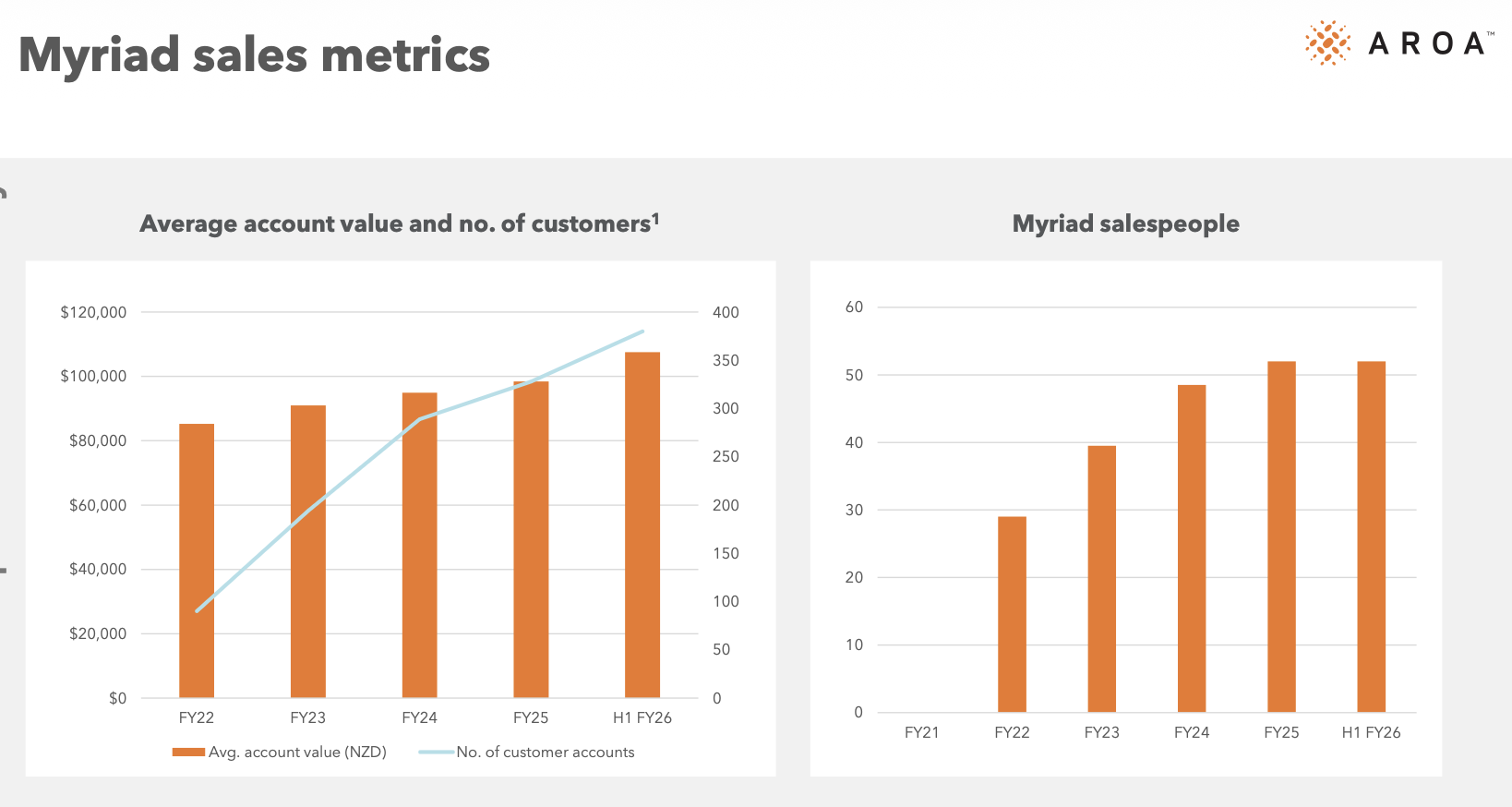
However, I think management is making the right call. The Myriad rep count has been deliberately held flat while productivity per rep was improved (now 440-odd accounts across 49 reps, vs ~330 accounts on a similar headcount in FY25). See the chart below.

Over FY24 to FY26, management has held the direct sales force essentially flat at c.50, while driving activation of new customer accounts from c.300 to c. 440, driving sales growth. By comparison, benchmarking this, Polynovo services 800+ US hospital accounts with a direct force of 85 + 15 management (based on my analysis of recent disclosures). So, for this market this size of ARX's sales force is underweight, reflecting a more cautious management approach.
FY27 will add 10–15 reps, and management has telegraphed a 100–120 rep target over 3–5 years. Based on looking across competitors, 100+ definitely makes sense to me, and this should drive continued strong sales growth over this timeframe.
What helps is that $ARX has a portfolio of products, and reps. can visit both the OR and the hospital outpatient clinic. Importantly, the salesforce will be enabled by a growing body of clinical data – both for Myriad, and now for Symphony – to breathe life into the withering Endoform franchise, and also take advantage of a disrupted outpatient environment with a low-cost product, compared with competition. It is a good set up albeit one with several moving parts.
The Symphony "reset window" is time-sensitive. If $ARX doesn't establish itself while competitors are exiting, the opportunity narrows materially. That said, don’t expect much from FY27 as the outpatient segment is in turmoil, with inventory to be offloaded presenting a short-term supply overhang.
Capex – still OK for the coming years
I asked management on the call about manufacturing capacity and future capex. Brian and CFO James both seemed comfortable. Existing facilities support NZ$200m+ revenue at current mix, with capex guidance of ~NZ$10m per additional NZ$100m of revenue capacity (potentially better at NZ$120–130m given the higher-mix products). That's a very capital-light scale profile and reinforces the self-funding narrative.
My Key Takeaways
1. The Myriad franchise is now at scale (NZ$49.5m, +54%, >90% GM, direct, durable evidence base) and on its own justifies a material share of the current market cap. Last five-year CAGR is ~65%.
2. OviTex needs to be re-marked to flat for the foreseeable future. The optionality from BD litigation and the unique reimbursement code is real but unquantifiable; I'd value it at zero in a base case and treat upside as gravy.
3. Symphony is the most interesting near-term catalyst and is conservatively guided. The CMS reset is a once-in-a-decade market dislocation in a re-based US$1–2bn market, and $ARX has the RCT evidence most competitors don't. (Look out for the details when published later this year!)
4. The FY27 EBITDA decline is intentional, not deteriorating fundamentals. But the operating-leverage narrative does pause for a year while management reinvest operating cash to build out the US sales force. And while that’s more “jam tomorrow” it is worth bearing this in mind given the muted market reaction to the result and the guidance.
5. Self-funding with NZ$27m of cash and no debt. Balance sheet is in good shape to execute. Financially sustainable.
Conclusion
On balance, $ARX is set-up to execute sustainably in the US, with multiple upsides from existing products. While I have held $ARX in the past, I exited (last in Dec-22) because I considered the path to cash generation just looked too long and the economics and reliance on Tela Bio both unattractive.
International expansion is a further upside. Management don't say much about this, but sales are no doubt via distirbutors in what is a competitive and well-served market. So resources would need to be allocated if this is to become material. An option perhaps, when the US potential has been captured - commendable focus by management.
Based on the FY26 result, and some of the insights provided, and the growing body of positive clinical evidence and Myriad traction, I’ve recently decided to give $ARX another chance. In fact, I’ve added to my position this morning, doubling it to 4.5% of my RL ASX portfolio.
Growth is now more in the hands of management as they have established their direct US sales force. They are much less dependent on Tela Bio (which remains a significant risk as it continues to burn cash.The last 5 years have seen the SP slide progressively from US$15 to US$0.90 today.)
The bull case has therefore narrowed somewhat. OviTex is no longer a core growth lever. However Myriad is scaling and Symphony offers upside. Genuine risk now sits on OviTex and, to management's credit, they’ve now been pretty clear about that.
I do believe there is a degree of conservatism in management’s guidance. Realising the upside does come down to how well they execute the sales and marketing expansion (under their control) plus whatever hopefully positive surprise Tela Bio can achieve.
Valuation
I'm still re-cutting my valuation following today's data. The key questions are: i) scenarios for Myriad, and ii) potential upsides for Symphony, with the cost base /capex now well-characterised.
To me, $ARX is looking like anything from $0.60 to as much as $1.20 – but for more than that, I need to crank the model. Picking up some more this morning at $0.62 and $0.64 seems pretty decent.
I’m really look forward to the Strawman meeting, and will be doing more work on $ARX in the lead-up to it.
Disc: Held (RL 4.5%)


Note: Graphs are my own
Big beat, and looks truly like a profitability inflection story.
A good setup for the Strawman interview with CEO Brian Ward in early June, post the full results release.
Price: AUD$0.60; Shares Outstanding: 334.9 million; Market Cap: NZD$249m (AUD$208m); Enterprise Value: NZD$226m (AUD$189m)
All monetary figures unless otherwise specified are in NZD
For a detailed background on this company, I highly recommend reading Mondy’s fantastic writeup on Substack: https://mondyinvest.substack.com/p/long-idea-aroa-biosurgery-asx-arx
Quick and dirty company background
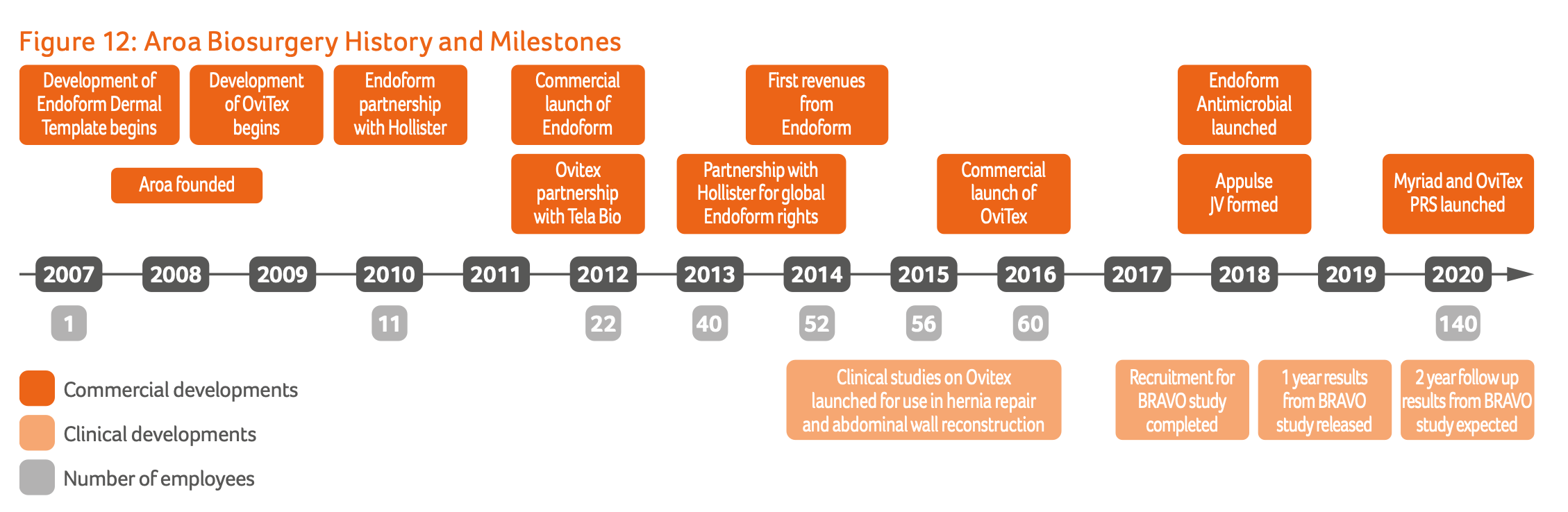
Aroa Biosurgery is a commercial-stage soft issue regenerated company headquartered in Auckland, New Zealand. The company was founded in 2008 by Dr Brian Ward, who continues to serve the company today as CEO and Managing Director, owning ~10% of the shares outstanding. It listed on the ASX in mid-2020, raising $45m at $0.75/share and quickly shot up to $1.35/share on the first day of trading.
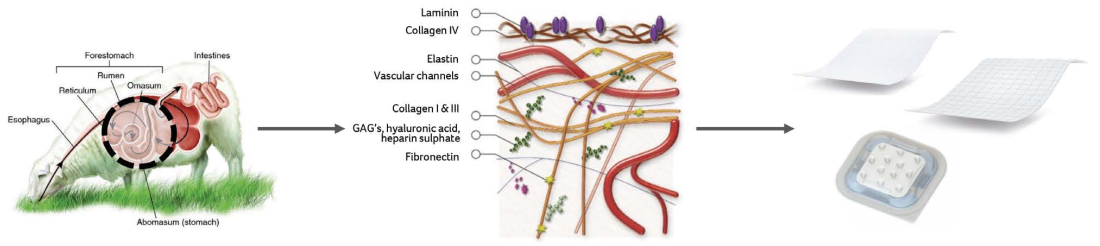
All of Aroa's products are built on the Aroa ECM (Extracellular Matrix) Platform, which is derived from the forestomach tissue of New Zealand sheep. The forestomach is a rapidly growing and regenerating organ with a unique structure optimised for nutrient absorption. Aroa's proprietary manufacturing process removes cells to prevent immune rejection while preserving the tissue's biological structure and bioactive molecules. The result is a biological scaffold that retains native vascular channels, enabling rapid blood supply establishment and kickstarting the body's natural tissue regeneration process.

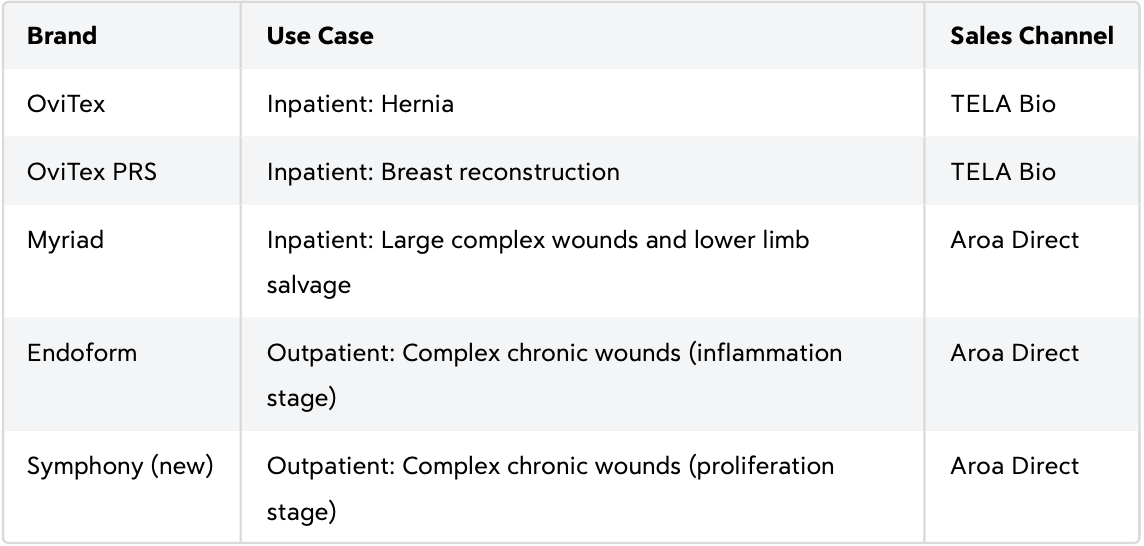
Today, the company is a manufacturer of 3 key products - Myriad, Ovitex and Endoform - with 95% of its revenue coming from the USA. The company is highly dependent on its sales partner TELA Bio to distribute its hernia and breast reconstruction products - TELA handles all the sales, marketing and distribution around these products.
Why is it interesting?
Good Division / Bad Division
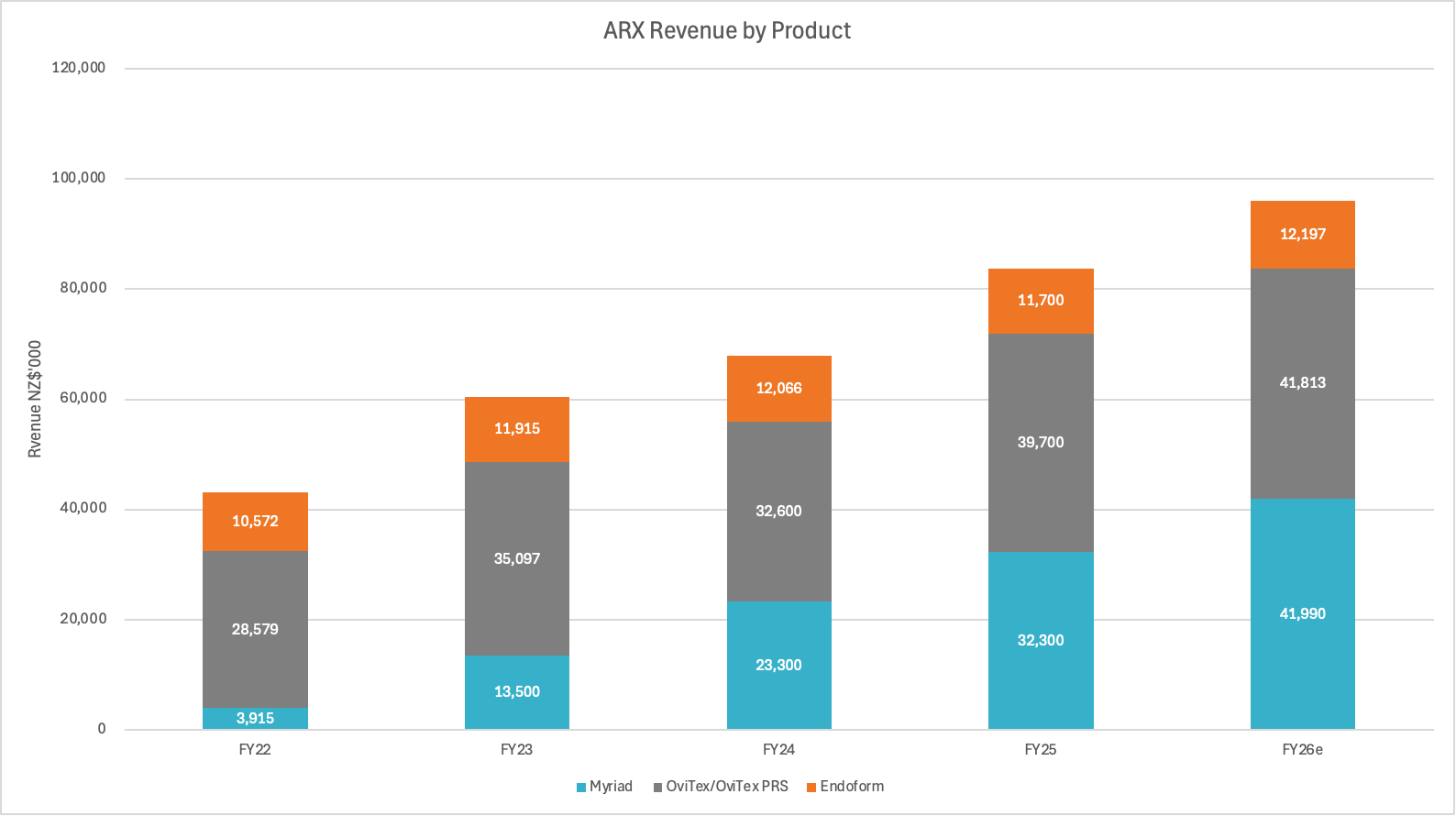
The top line growth rate over the past 3 years has been strong - revenue grew from $60.5m in FY23 to $96m in FY26e at a CAGR of 16.6%pa. However in that period, OviTex only grew at 5.3%pa as TELA Bio struggled with monopolistic competitors and Endoform flatlined (mature product). The true growth engine has been Myriad which was only launched in FY22 and now account for 45% of revenue. It’s now the company’s largest product line, is still growing at circa 35%pa and will make a much larger contribution to the company’s top line growth going forward.
Myriad shows no signs of slowing down, with both account numbers and average account values continuing to increase. Meanwhile, sales staff growth has slowed over the last couple of years, demonstrating emerging operating leverage. Management believes the soft tissue reconstruction market is US$730m in size, with Aroa's share at only US$28m annually, suggesting plenty of room for continued growth.
Symphony: Another leg to the stool?
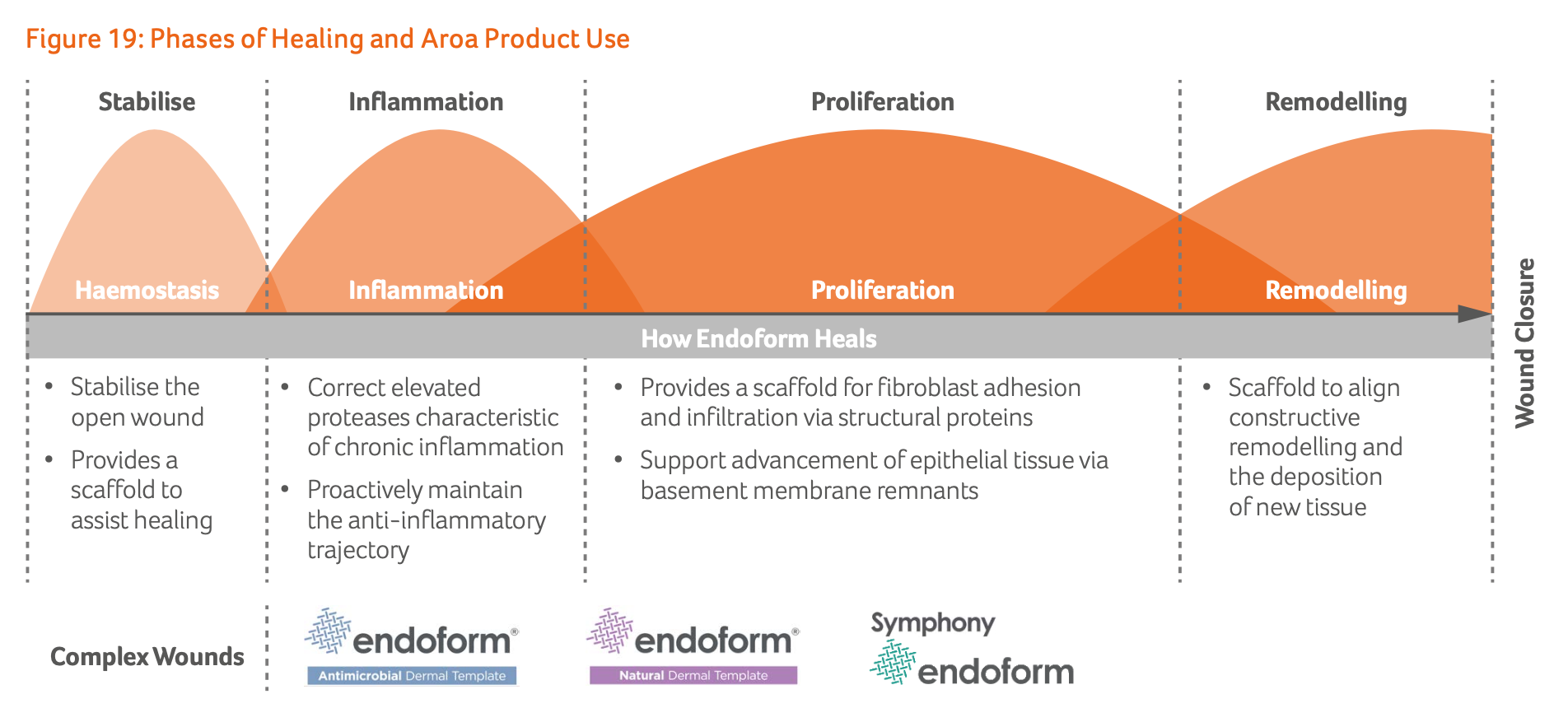
Aroa’s Symphony is a product that is applied on complex wounds during the proliferation phase of wound healing and competes in the CTP (Cellular and/or Tissue-based Products) market, commonly referred to as "Skin Substitutes.” The product gained FDA clearance in 2020 and was launched commercially in 2023, but has been kept in a holding pattern since.
Symphony was placed on hold due to a dysfunctional CTP outpatient reimbursement market. Essentially, skin substitute manufacturers and doctors were collaborating to exploit Medicare by charging artificially inflated prices (e.g., US$2,000/cm²) and pocketing large commissions. Aroa, being the high integrity company that they are, only charged US$70-100/cm^2, and refused to participate in the scheme. As a result, the product never gained traction. You can read more about it here: https://oig.hhs.gov/reports/all/2025/medicare-part-b-payment-trends-for-skin-substitutes-raise-major-concerns-about-fraud-waste-and-abuse/
However, on January 1, 2026, new Medicare payment rules took effect to close the loophole by establishing a single outpatient reimbursement rate for skin substitutes at $127.14/cm². This has created a much more favourable environment for Symphony, as it's likely to push out competitors with expensive products and costly distribution models. The company intends to ramp up sales starting in FY27.
To directly quote the CEO from the last conference call: “I think we would expect Symphony to at least have the same sort of growth trajectory as we've seen with Myriad previously.”
Myriad generated $3.9m in revenue in its first year and $13.5m in its second. If Symphony replicates this success, it would add another major product line to the group, creating an additional growth engine for the business. Symphony is also complementary to Endoform, as together they provide products covering the entire wound healing lifecycle, which could also boost sales of the latter.
Yesterday, the company announced that the Symphony Randomised Controlled Trial (RCT) is now complete and preliminary findings indicate that the study achieved the primary endpoint. Once the results are confirmed and published, it should further support the use of Symphony for the treatment of non-healing Diabetic Foot Ulcers (DFUs) and any future changes in reimbursement policy.
Profitability inflection
Over the past few years, Aroa has been investing heavily in building out its own sales team to support Myriad's growth, expanding its manufacturing capacity, and developing new products (including ENVIO for a estimated 2028 release). The company has now reached a profitability inflection point where incremental sales and marketing expenses and R&D spend are moderating, allowing earnings to turn positive. With the Symphony randomised clinical trial having just concluded, I expect expenses as a percentage of revenue to continue to moderate in FY27 as the jaws of operating leverage open wider.
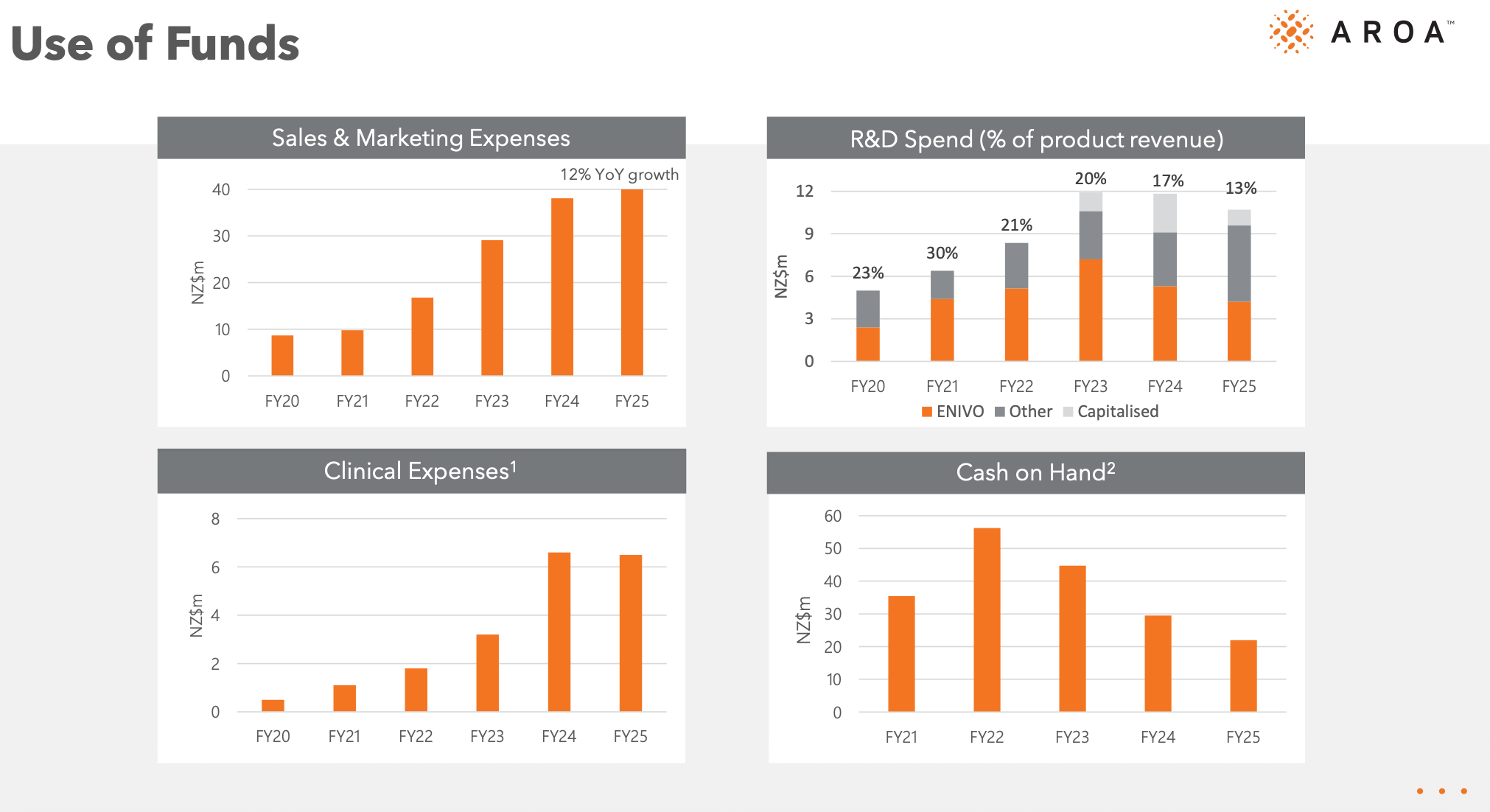
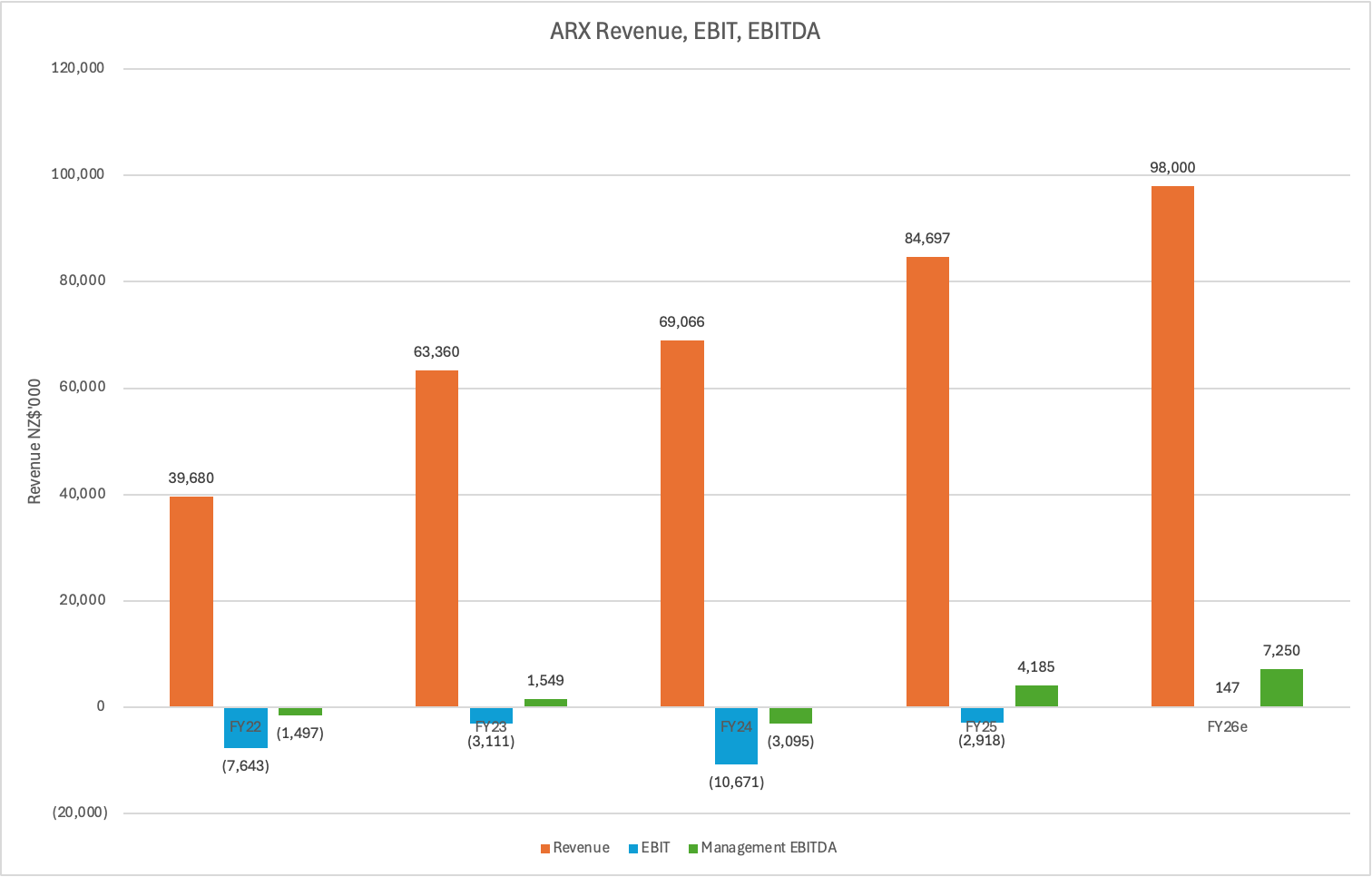
With top line growing at 15%+ and expected to accelerated, 85% gross margins, inflecting into profitability with signs of operating leverage evident - all the while trading at 2.15x FY26 revenue. It’s definitely not expensive for what appears to be a quality and growing business.
With top line growing at 15%+ and expected to accelerated, 85% gross margins, inflecting into profitability with signs of operating leverage evident - all the while trading at 2.15x FY26 revenue. It’s definitely not expensive for what appears to be a quality and growing business.
Risks
TELA Bio
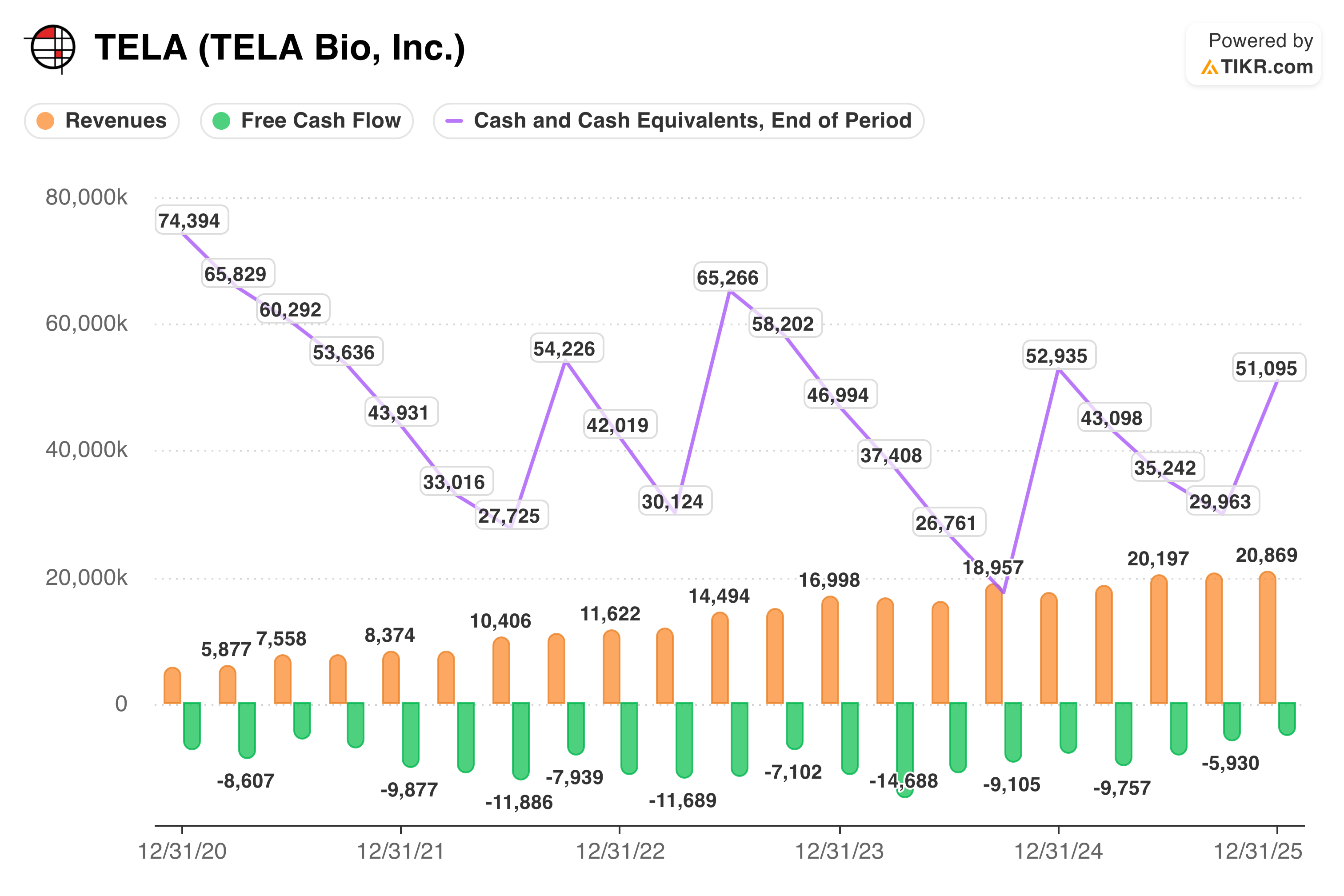
TELA Bio is Aroa's commercial partner in North America and Europe for its OviTex branded products, which are used in hernia repair, abdominal wall reconstruction, and breast reconstruction. Under this partnership agreement, Aroa handles manufacturing and product development while TELA Bio manages sales, marketing, distribution, and clinical trials. In return for its contribution, Aroa receives 27% of TELA Bio's net sales from these products.
This arrangement currently represents approximately 43% of Aroa's total revenue and generates highly attractive economics - 70%+ gross margins with strong earnings margins thanks to minimal costs below the gross profit line.
Despite strong revenue growth, TELA Bio has never achieved financial sustainability, burning substantial cash each quarter. The company has survived through periodic capital raises and debt financing. Most recently, in November, they raised an additional US$11.9m in equity and increased their loan facility by US$14.1m, with an option to extend another US$10m. With US$41.8m in cash on hand and undrawn debt capacity, the company has roughly two years of runway at its current burn rate, assuming no significant improvement in the underlying business.
TELA Bio's financial struggles pose a major risk to Aroa. If TELA Bio runs into serious trouble, it could disrupt sales and hurt Aroa's revenue. However Aroa’s position has been that the OviTex portfolio is still a US$80m sales/year business that is very valuable, and who’s economics would be attractive to larger industry players who could acquire the assets and operate them more efficiently.
OviTex's share of Aroa's revenue is declining significantly - from 73% in FY22 to 43% currently, and expected to fall to approximately 30% within two years. The longer TELA Bio can maintain operations in its current state, the less disruptive any potential interruption would be, as Aroa continues to grow and diversify its product portfolio beyond its dependence of the TELA Bio partnership.
Myriad competition
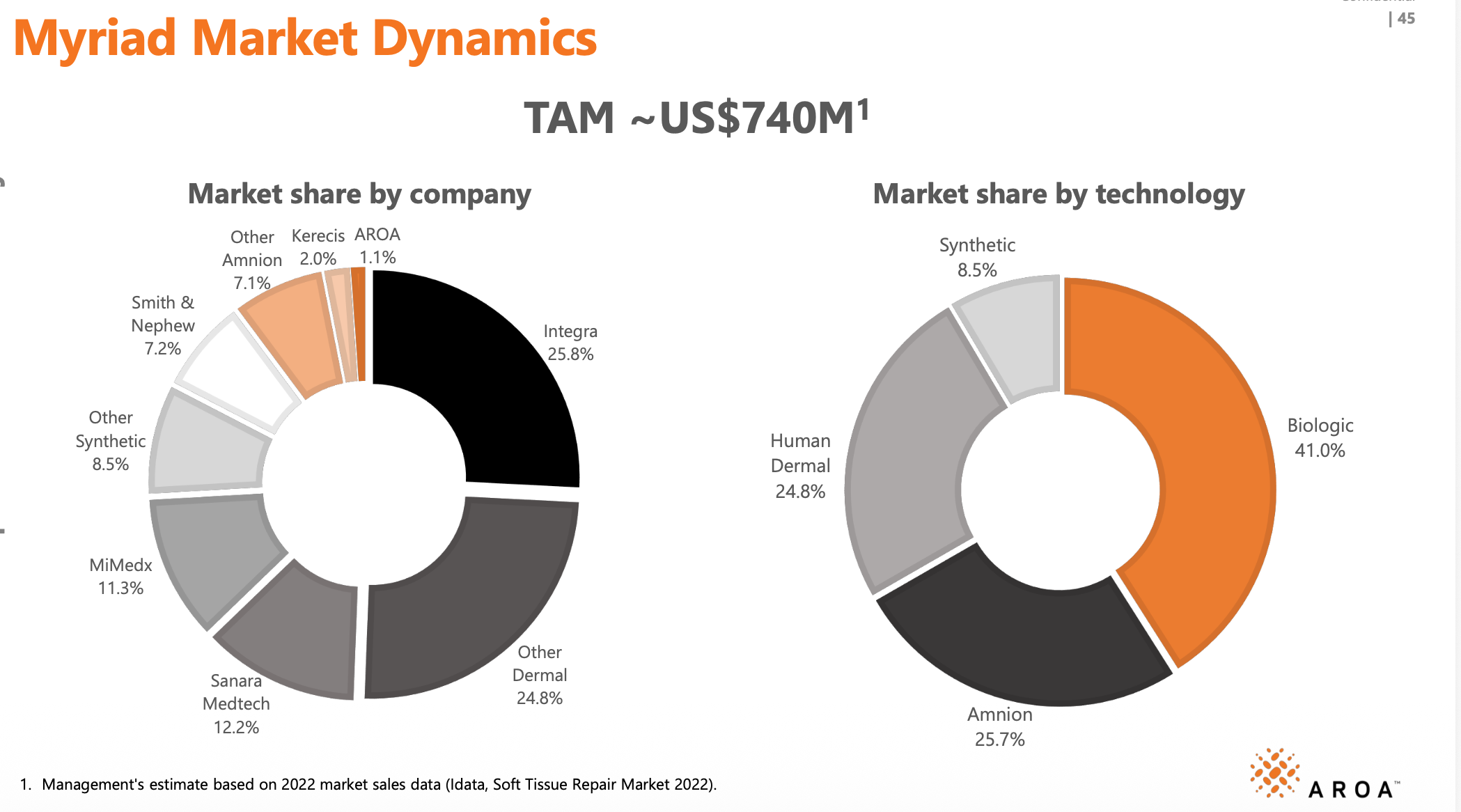 Note: Myriad now has~3.8% market share
Aroa’s Myriad is positioned as a premium biologics product, with all the superior healing properties, while carrying a significantly lower price point and very low rates of inflection and complications. That said, the soft tissue reconstruction market is a fiercely competitive one.
One watch point is the growing traction of synthetic solutions within the space. While synthetics cannot match biologics on healing outcomes or complication rates, they are winning on three fronts: cost, consistency, and infection resistance. Newer products such as Polynovo's Novosorb MTX are also improving and addressing historical disadvantages of synthetics such as the need for multiple applications or two-stage surgery - further narrowing the gap.
Another watch point is Integra's PriMatrix, a like-for-like alternative to Myriad, which is returning to market after an extended absence. Integra encountered serious contamination issues at its Boston facility in mid-2023, leading to the suspension of several products, PriMatrix among them. The product relaunched in Q3 2025 using third-party suppliers, though Aroa has yet to feel any impact, with management having recently upgraded FY26 guidance, implying continued strength in Myriad sales.
Conclusion
Aroa Biosurgery is a fast growing, high-margin wound care company that is just beginning to inflect into profitability.
The growth rates are somewhat understated due to mature and stagnant product lines that previously dominated the company’s revenues. Myriad is Aroa’s key growth driver, and having only launched in FY22 is now the company’s largest product by revenue. Its substantial annual growth rates of circa 35% should now begin to impact revenue and lift growth rates in a more substantial way at the group level.
And with Medicare payment rules having recently changed significantly, the time is now right to re-launch Symphony - a product management believes should re-enact the success of Myriad. This could very well create a second major growth driver for the company in the coming years.
The company’s year end is 31 March and the FY26 report is expected by the end of April 2026.
Disclosure: At the time of writing I hold shares in ASX:ARX
Current Market Cap $224.2m

Management Bio's
Jim McLean
James (Jim) McLean is the Chair of the Board of Directors of Aroa Biosurgery.He is a resident of New Zealand and has been a Director of Aroa Biosurgery since August 2011. For 25 years he has served as either Chair, Director, or an executive of research and technology businesses for both commercial and New Zealand Government organisations. In addition to Aroa Biosurgery, Jim is also Chair of Prevar Limited. Jim was Chair of the New Zealand Institute of Plant & Food Research and Chair of its predecessor HortResearch, as well as several private businesses and start-up companies. He served on the board of the then Foundation for Research, Science, and Technology including five years as deputy Chair. Jim was an executive and director of Genesis Research & Development Corporation Limited during its early stages through public listing.Before specialising in science and technology businesses, Jim held management positions with an international manufacturing business and spent thirteen years as a partner at chartered accountants, EY. His time at EY was focused on business strategy and included two years’ secondment to EY’s Washington DC office. Jim has a BSc (Hons) in Chemistry from University of Otago and a Post Graduate Diploma in Accounting from Victoria University of Wellington. Jim is considered by the Board to be an independent Director and is a member of the Audit and Risk Committee and Remuneration and Nomination Committee.
Brian Ward
Brian is the Founder and Chief Executive Officer of Aroa Biosurgery. He is a resident of New Zealand and has been a director of Aroa Biosurgery since September 2007. He has held senior corporate roles in life sciences and health care companies over the last 25 years. He has extensive management experience in life science companies spanning clinical, technical, sales, marketing, corporate development and strategy having worked for a number of multinationals including Baxter, Beecham and SmithKline Beecham throughout the world. He has managed investments into New Zealand technology companies for the Foundation for Research Science and Technology, served as the founding CEO of NZBio, and has sat on a number of government and industry expert panels. Brian has been responsible for leading the Company’s growth from start-up through to becoming a vertically integrated medical device business with substantial US sales and a developing international presence.He is a graduate from Massey University with a Bachelor’s degree in Veterinary Science, a Member of the Royal College of Veterinary Surgeons (UK), and holds a Masters degree in Business Administration graduating with distinction. Brian is the managing director and chief executive officer of the Company and a substantial shareholder in the Company and as such he is considered by the Board to not be an independent Director.
Catherine Mohr
Catherine is a Non-Executive Director of Aroa Biosurgery. She is a New Zealand citizen and resident of the United States and has been a director of Aroa Biosurgery since November 2022. Catherine’s diverse background spans several areas, including surgery, medical technology, engineering, product development and design, intellectual property, U.S Food & Drug Administration compliance and education, global entrepreneurship, automotive and aerospace. Currently, Catherine is the President of the Intuitive Foundation, the corporate Foundation of Silicon Valley based Intuitive Surgical, pioneers in the field of robotic-assisted surgery and maker of the da Vinci surgical robot system. Prior to leading the Foundation, Catherine held several senior roles at Intuitive Surgical, including Vice President of Strategy and Director of Medical Research. Catherine is on the board of directors for FINCA International and has been involved with several successful emerging companies in medical technology and other areas, notably co-founding VeriSure, where she invented the LapCap™, the first of a new category of laparoscopic surgery enabling products.Catherine holds a Bachelor of Science and Master of Science in Mechanical Engineering from Massachusetts Institute of Technology (MIT), and a Doctor of Medicine from the Stanford University School of Medicine.
Phil McCaw
Philip (Phil) McCaw is a Non-Executive Director of Aroa Biosurgery. He is a resident of New Zealand, is the Founding Partner of Movac, one of New Zealand’s leading venture capital funds. He led the original investment round into AROA in 2008 and has worked closely with the Company and has served on the Board since then. He is currently the Executive Chair and CEO of Author-IT Software Corporation, a software company that delivers component authoring solutions, enabled by AI, for the largest global pharmaceutical companies. He was also Chair of the New Zealand Government’s Startup Advisors’ Council, established to help identify and address the opportunities and challenges facing high growth start-up businesses. Phil has over 20 years’ experience investing into New Zealand technology companies and helping to guide their growth. He was an early investor in Trade Me, New Zealand’s leading on-line trading community, which was sold to Fairfax in 2006. Phil was also an early investor into PowerByProxi, a wireless power technology spin-out John Pinion Outside of Movac, Phil remains an active angel investor and maintains a personal angel investment portfolio. He is a strong advocate for the development of the entrepreneurial and early-stage investment eco-system in New Zealand and was the past Chair of the Angel Association of New Zealand. Prior to starting Movac, Phil spent 10 years with Deloitte Consulting working in New Zealand and the US. As a substantial shareholder in AROA, Phil is considered by the Board to not be an independent director. Phil has a Bachelor of Business Studies (Senior Scholar) from Massey University.
Paul Shearer
Paul is a Non-Executive Director of Aroa Biosurgery. He is a resident of New Zealand and joined AROA’s Board in October 2025. Paul is an accomplished global healthcare executive with extensive experience in the medical device industry and a proven record of leading international sales growth. Paul’s most recent role was as Senior Vice President – Sales & Marketing at Fisher & Paykel Healthcare, which he held for over 20 years. Before joining Fisher & Paykel Healthcare, Paul held roles at ICL Limited and Computercorp Limited. Paul is a current director of Skellerup Holdings, a New Zealand manufacturer and global exporter of rubber and polymer products. Paul holds a Bachelor of Commerce (Marketing) from the University of Canterbury.
Darla Hutton
Darla is a Non- Executive Director of Aroa Biosurgery, She is a resident of the United States and has been a director of Aroa Biosurgery since March 2024. She has more than 25 years of medical technology experience, including global leadership expertise in commercial strategy, operations, sales, marketing, healthcare analytics, lean and enterprise consulting. Darla is currently Vice President, Asia Commercial Operations and Marketing at Intuitive, pioneers in the field of robotic-assisted surgery and maker of the da Vinci surgical and ION diagnostic robot systems. Throughout her tenure at Intuitive, Darla has held commercial roles of increasing responsibility including Regional Sales Director, Vice President of Corporate Accounts-US, and Vice President Marketing, Market Access & Custom Hospital Analytics. In these roles, she has contributed to the expansion of Intuitive’s commercial operations capabilities and range of global offerings. In addition, Darla has served as a member of Intuitive’s Inclusion and Diversity Executive Council. Prior to Intuitive, Darla held commercial positions at other successful medical technology, pharmaceutical, and biotech companies, including Boston Scientific and GlaxoSmithKline, and spent her early professional career in the cardiac-thoracic nursing field. Darla holds a Bachelor of Science and Master of Science from the University of Tampa.
John F Diddams
John is a Non-Executive Director of Aroa Biosurgery. He is a resident of Australia and joined the Board in November 2019. John has over forty years’ experience as a CFO, CEO and director of both private and publicly listed companies. John has extensive knowledge and experience in the practical application of ASX Listing Rules, Australian corporations’ law, international accounting standards and corporate governance principles. He heads a CPA firm providing corporate advisory services to SME and mid-cap companies and has managed the listing process, secondary capital raisings and ASX listings in a number of diverse industry sectors, including oil and gas, food and retail, telecommunications, adventure tourism, biotechnology, and the dental and medical sectors. John holds a Bachelor of Commerce from University of NSW, is a Fellow of the Australian Society of CPAs and a Fellow of the Australian Institute of Company Directors. John is currently Chairman of the Board of xReality Group Limited (ASX:XRG) as well as a non-executive director of New Zealand based Volpara Health Technologies Limited (ASX:VHT), Surf Lakes Holdings Limited and DIT AgTech Limited. John is considered by the Board to be an independent Director and is Chair of the Audit and Risk Committee.
Results out for ARX this morning.

I'm still digesting, but on first glance a good result. ARX was FCF positive for the first time, and we can see the start of the operating leverage at play with a much improved net loss (down to $921k from $3.5m - normalised). Actual loss was $1.2m vs $3.9m - the main normalisation being FX changes.
Revenue was up 14% year on year and still has a pristine balance sheet - cash of $23m vs $22m PCP. Only LT debt are some leases of $7m. My thesis has always been that ARX has valuable technology, which is superior to others for a number of common applications in wound management. I like that all their presentations focus on developments in the products, not financials, etc. Demand is growing and it's doing a good job of developing new products. It's US distribution deal has always held the company back, but the fears of the US distributor failing appear to be easing (a little). Also note all the above is quoted in NZ$, so take care in considering valuation (which is AUD, given it's ASX listing).
Might be time for an update @Strawman from the CEO...
Owned IRL.
Soft tissue generation company $ARX posted their 4C today.
While I don't hold $ARX, I follow its progress and performance as part of my general monitoring of the dermal repair sector, as I currently hold $AVH.
Their Highlights
• Operating cash flow was NZ$2.1 million.
• Strong cash receipts from customers of NZ$23.5 million. •
Total cash on hand increased by $1.3 million, ending the quarter with a cash balance of NZ$23.4 million.
• Positive net cash flow for fourth consecutive quarter.
• FY26 guidance reaffirmed - total revenue of NZ$92-100 million and normalised EBITDA of NZ$5-8 million.
• H1 FY26 results to be released on Tuesday 25 November 2025.
• Highest recorded sales quarter for Myriad™ of NZ$10.2 million.
• Eight new peer-reviewed studies published during the quarter.
• Proposed changes to US outpatient wound care reimbursement policy present an opportunity for AROA’s Symphony™ product.
My Assessment
Below I included my casf flow tracker, where the trend lines plotted are over the last 8 quarterly reports.
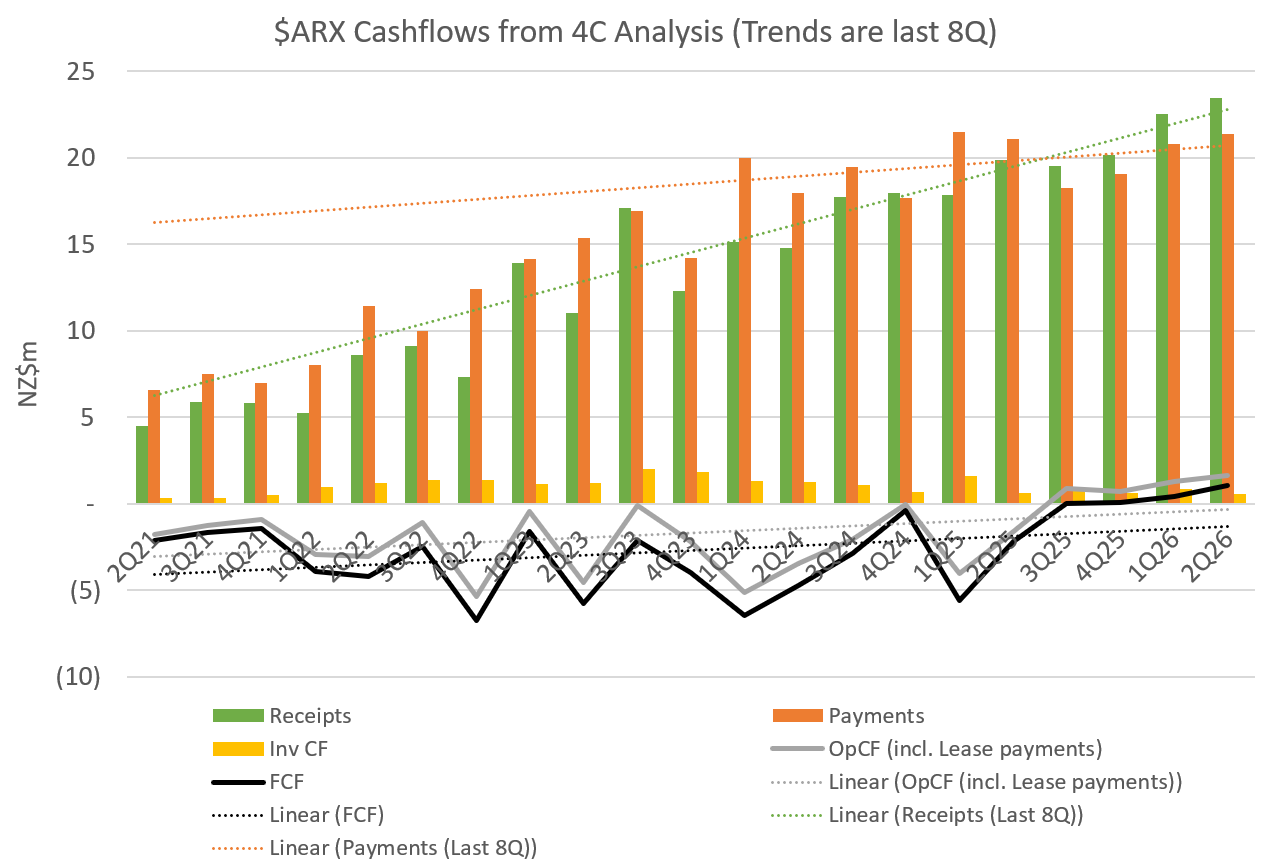
Today's report is the 4th consecutive report of positive operating and free cash flows - an important milestone for the business indicating that it has passed through the inflection point to cash profitability.
Receipts grew +18% to PCP, with costs being well controlled with payments up only 1.2%. For now, the existing facilities are able to absorb demand growth - so capex is low, and there have been no announcements of any impending, significant new capex (although at some stage this will be required).
Without getting into a lot of detail, the company appears to be making steady progress across the product portfolio. Importantly, the recent rate of sales growth is consistently outstripping the rate of cost growth, which bodes well for sustainable profit growth - albeit at an unspectacular level. FY26 appears on track to deliver a maiden positive NPAT. Guidance for Revenue and EBITDA for the FY were maintained.
My chips are still very much on $AVH (assuming they work through recent misfortunes which have been covered amply on this platform).
$ARX appear to be well-managed, with a product portfolio that continues to gain traction in the US market - growing above the overall rate of growth of the dermal substitutes market.
My takeaway from this result as regards $AVH, is that there are no discernible changes in the overall trends in the dermal repair segment. So $AVH's result will be judged very much on its own merits, with the big uncertainty as to whether the CMS coding problem with ReCell has been fixed, and the extent to which customer behaviour has "normalised".
Disc: Not Held
Still catching up on updates but this is one I bought after reading the straws.
Have business in the US but I don't think tariffs will affect their products.
Seems like a positive update.

[held]
Dermal and wound repair company $ARX published their quarterly today.
Overall, incremental progress on all fronts. I don't hold (RL or SM) but continue to monitor as part of my focus on the sector, where I have a significant holding in $PNV.
Some lumpiness in results is driven by the restocking behaviour of their US Partner TELA Bio.
Improving (i.e. reducing) cash burn appears driven more by government grants and a lower rate of investment in new facilities than the product growth itself. (See bottom of post for my cash flow analysis.)
I have held previously, but won't because growth trajectory is modest compared with sector peers, and cash generation is not in sight. Overall revenue growth appears to be in the range 20-30%, having declined from 40-60% over FY22 and FY23.
What I do like about management is their level-headed and balanced reporting. For example, they could have highlighted that Q4 reciepts were up 46% to PCP, but they didn't because that would be cherry-picking a favourable prior period and lumpiness.
$ARX follows a Mar-Mar FY, so financials will follow in a few weeks.
Their Highlights
Financial Highlights
• Strong cash receipts from customers of NZ$18.0 million, reflecting a continuation of the prior quarter’s step-up in Myriad™ and OviTex™ /OviTex PRS sales.
• Positive net cash inflows from operations of NZ$0.3 million, exceeding Q4 breakeven expectations.
• Net cash outflows from investing activities reduced to NZ$0.7 million, reflecting continued planned investment into additional manufacturing plant & equipment capacity with completion expected by Q3 FY25.
• The Company achieved a 71% reduction in quarterly cash burn to ~NZ$1 million, ending the year with a strong closing cash balance of NZ$29.5 million.
Operational Highlights (My tuncated list)
• Continuing expansion in Myriad sales access during the quarter, with Myriad active accounts increasing from 205 to 218 during the quarter.
• Strong CY23 OviTex™ PRS and OviTex sales, with TELA Bio, Inc. (‘TELA Bio’) reporting CY23 revenue of US$58.5 million (41% ‘pcp’ 3 growth) and providing CY24 revenue guidance of US$74- 76 million (27-30% pcp growth).
• Product shipments to TELA Bio continue to re-align with its sales trajectory (following a reduction in shipments during H1 FY24) with H2 FY24 cash receipts from TELA Bio increasing 20% compared to H1 FY24.
• US launch of OviTex IHR, a new AROA ECM™ product specifically designed for use in laparoscopic & robotic-assisted inguinal hernia repair and co-developed with TELA Bio under the parties’ existing license arrangement.
• Enrolments completed for two clinical studies; the pilot study assessing Enivo™, AROA’s new tissue apposition platform technology, and the Myriad Augmented Soft Tissue Regeneration Registry (‘MASTRR’), AROA’s largest prospective study to date. AROA expects to commence publishing study results from Q3 FY25. AROA’s Symphony™ randomised control trial continues to progress well, with a total of 90 patients enrolled by the end of the quarter (n=120).
• A peer-reviewed publication of three case reports indicates that Myriad Matrix™ and Myriad Morcells™ may complement existing negative pressure wound therapy (‘NPWT’) protocols, reduce the frequency of dressing changes associated with NPWT usage in abdominal soft tissue defects and decrease the overall healing time of complex abdominal defects.
My Cash Flow Analysis
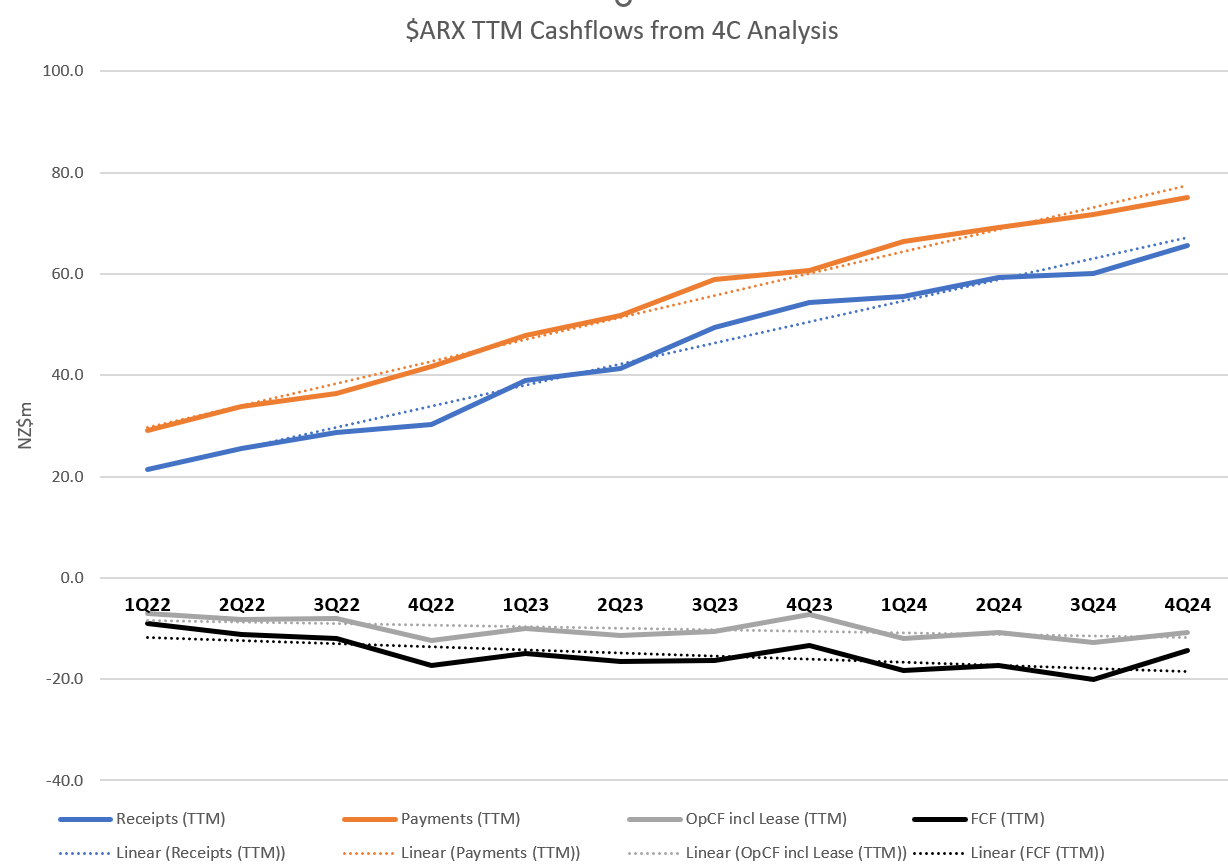
While there is a weak positive trend toward FCF generation emerging over the last 8Q, the improvement of the last 3-4 quarters is driven more by reducing investment and some government grants, than underlying strength in the operating economics. That said, the last year has seen improvements in cost control, while growth is continuing.
Quarterly view below in Fig 1, and TTM pic in Fig 2. On the quarterly plot, the trend line is last 8Q only.
Figure 1
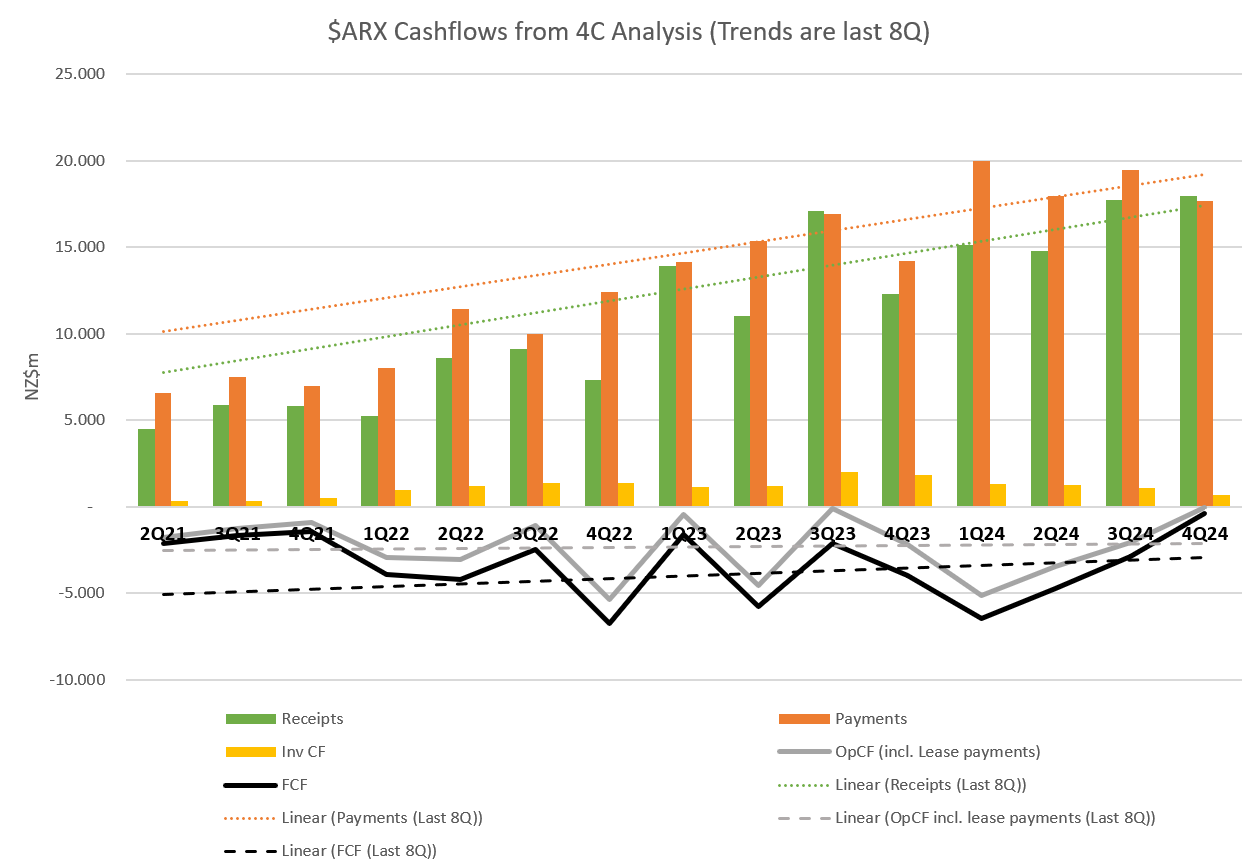
Fig 2
Disc: Not held