Consensus community valuation
Straws are discrete research notes that relate to a particular aspect of the company. Grouped under #hashtags, they are ranked by votes.
A good Straw offers a clear and concise perspective on the company and its prospects.
Please visit the forums tab for general discussion.
They have just gone into a trading halt.
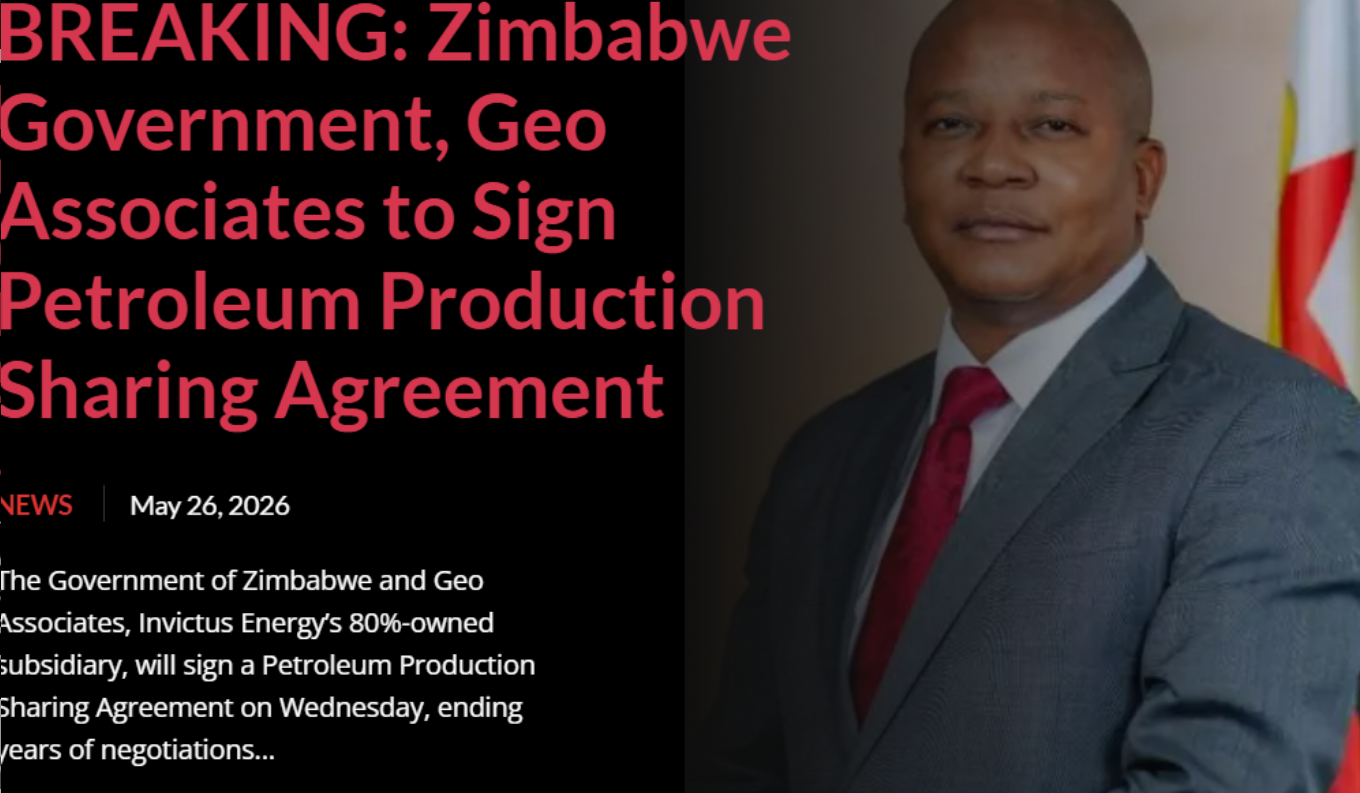
It's finally here! This is now going to fly! Next part is to get the drill bit turning.
Disclosure: I hold IRL and SM.
Invictus Energy – One‑Page Operator Read (April 2026)
Invictus has just dropped a presentation. Certainly very upbeat, I'm still cautious around when the PPSA is going to be signed. At least it is listed as a top priority. I'll be accumulating more if it gets below 6 cents or the PPSA is signed when the pullback occurs from the news.
https://api.investi.com.au/api/announcements/ivz/f90313f1-08d.pdf
The following is an AI summary if you don't want to read the whole story.
Invictus finally looks like a company shifting from “maybe” to “execution”. The April deck is the clearest articulation yet of where the value sits and what actually matters over the next 12–18 months.
Musuma‑1 is now the main catalyst.
Spud locked for H2 2026, targeting 1.2 Tcf + 77 mmbbl (mean) with a high‑side over 3 Tcf.
Westwood has it on their “Key Wells to Watch 2026” list — rare air for a microcap.
Cheap, vertical, ~14‑day well. Clean binary outcome.
Mukuyu is now being framed as a field, not a one‑off hit.
The language has shifted:
- “Mukuyu gas‑condensate field”
- “Mukuyu‑2 Gas Condensate Discovery”
Appraisal (Mukuyu‑3), well testing and 3D seismic are now part of the forward plan.
This is the first time IVZ has presented Mukuyu as a multi‑well development.
Political alignment is now a genuine asset.
- National Project Status (Aug 2025)
- Mutapa Investment Fund on the register
- OFAC sanctions lifted (Mar 2024)
Zimbabwe is clearly backing this project.
PPSA execution is the real unlock.
The company is blunt: the Petroleum Production Sharing Agreement is the key to bankability.
No PPSA = no scale.
PPSA executed = financing and development become real.
Early monetisation is now credible.
The Eureka Gas‑to‑Power pilot is moving toward FID.
It delivers:
- early cashflow
- reservoir performance data
- proof of concept
- lower capex to first production
Mukuyu is 5 km from grid infrastructure and ~50 km from Eureka.
This is the first near‑term revenue pathway that isn’t hand‑waving.
The portfolio is now basin‑scale, not single‑asset.
Across SG 4571 + EPOs 1848/49:
- 4.2 Tcf gas + 264 mmbbl condensate across 12 prospects
- 1.2 billion barrels in basin‑margin oil leads
Musuma, Mopane and Mururo may be part of a larger connected system.
Market and infrastructure are already in place.
Southern Africa remains structurally short gas with >US$10/mcf pricing.
Multiple existing routes: ROMPCO pipeline, Beira corridor, SAPP grid, rail, liquids pipeline.
This reduces development risk materially.
New Ventures Strategy is a notable shift.
For the first time, IVZ is openly pursuing producing or near‑term development assets to build scale and cashflow.
This is a move toward becoming a multi‑asset African E&P, not a single‑well explorer.
Bottom Line
Invictus is finally presenting like a company with a real discovery, a real pathway to monetisation, and a basin‑scale portfolio behind it.
The next phase is simple:
PPSA + Musuma‑1.
Everything else is leverage.
DISC: Hold IRL & SM
IVZ Webinar – April 2026
The $10m raise was exactly what it looked like — a tactical placement sized purely to get Musuma‑1 moving without waiting around for the PPSA. Scott was very clear this wasn’t a “keep the lights on” raise. It funds the well, the prep, and the long‑lead items.
The PPSA bit was interesting. The holdup hasn’t been government at all — it’s been lawyers grinding through the final wording. Pretty much what we suspected. Scott said there has been movement and they’re still on track for April signing. He even quoted: “Execution in April – timing commitment provided by the Minister of Finance.” That’s as explicit as he’s ever been. PPSA is the last piece they need to lock in the remaining contracts.
Musuma‑1 got the bulk of the airtime. Strongest DHI outside Mukuyu, flat spot across multiple seismic vintages, shallow vertical well (~1,500m), 1.2 Tcf + 77 mmbbl condensate target, and a US$6–10M cost range (final number still being pinned down). After two big surveys they’ve got a much better handle on the subsurface — no more guessing. They’re expecting ~14 days drilling. Also easier to source equipment now thanks to all the activity in Namibia.
He made it very clear: this is the highest‑impact, lowest‑cost well they can drill right now.
Strategically, Musuma is a big swing. If it hits, it opens a second play fairway on the eastern side of the basin and potentially ties in two other systems. This isn’t “another prospect” — it’s basin‑defining if it comes in.
Operationally they’re already moving: well pad prep, rig discussions, service providers, long‑lead items. All of it tied to PPSA timing.
Mukuyu got the usual reminder — it proved the system works. Musuma is the next logical step to scale the resource base.
Commercialisation got a quick mention. The Eureka pilot is still the early monetisation path, and a Musuma success would accelerate it.
The New Ventures talking point was the curveball. They’re targeting acquisitions of producing or near‑term development fields. They’ve secured support from a major oil and gas trade house to provide acquisition finance, which means IVZ can retain more equity in whatever they pick up. It’s a multi‑prong strategy. Big upside, but also raises the question of bandwidth — it’s a lot to take on.
Overall message: PPSA close. Musuma funded. Basin expansion next.
For those interested, here is the link.
Invictus Energy shareholder update webinar - April 2026 - YouTube
Disc: Hold IRL & SM
IVZ – Quick Take on the Capital Raise
Invictus has raised $10m at 6c via a placement to sophisticated investors. The rumours were right! On the headline price it looks flat to the 15‑day VWAP and at a premium to the 30‑day VWAP, but once you factor in the free attaching options (1‑for‑2 at 10c), the effective pricing is discounted. That’s normal for a small raise of this size and stage — it’s simply the cost of getting the next well funded.
Musuma is the first proper test outside Mukuyu. The seismic is about as strong as you’ll see in a frontier basin: consistent flat spot, amplitude brightening, and multiple DHI lines all pointing to the same thing. They’re targeting 1.2 Tcf + 73 mmbbl condensate on an unrisked basis.
The well is shallow (~1,500m), vertical, and low‑cost. Spud is planned for H2 2026 once the PPSA is signed and the remaining long‑lead items are locked in. Mukuyu already proved the system works; Musuma is the first step in seeing how big the basin actually is.
As for who went into the raise — the announcement uses the standard “sophisticated and institutional” wording, but realistically most institutions will wait for the PPSA before they model anything. Either way, the raise funds the next high‑impact well.
Now all we need is the PPSA to be signed, as per my previous post. There finally seems to be action on this, so hopefully we see an announcement on that soon.
IVZ — PPSA Timing + Raise Leak
Two Zimbabwe media pieces worth noting:
21 March — fuel‑import pressure rising:
This one is about the government feeling the squeeze from higher oil prices and the hit to the national fuel bill. It positions domestic gas as a way to ease that pressure.
15 April — PPSA “nearing signing”:
This one says the PPSA terms are finalised and signing is close. It’s the strongest language they’ve used so far. Those two together show momentum — but Zimbabwe can still delay things. Here’s the real list of what can push this out of April.
PPSA — What Could Still Push It Out of April
Even with the April article saying signing is close, Zimbabwe can still drag this out. The actual risks are simple:
- President timing — if he wants to be in the photo, everything waits for his diary.
- Cabinet schedule — they like signing big agreements around Cabinet days; if the agenda is full, it slips.
- Paperwork crawl — AG → Mines → Finance → Cabinet → signing. Any desk can slow it.
- Media optics — they sometimes hold announcements to line up with state media cycles or diplomatic events.
- Internal politics — ministers jockeying for credit can add days.
- Bureaucracy — documents sit, people travel, signatures take time.
- External noise — fuel queues, currency issues, protests… anything can bump it down the priority list.
Because of all the co-ordination required and the time left this month, I’d be surprised if it is signed this month. I don’t think it is anything to worry about, it is just Zimbabwe being Zimbabwe.
Momentum is still real (March = pressure, April = “nearing signing”), but they can absolutely slip into early May for reasons unrelated to the deal itself.
IVZ Trading Halt + Raise Leak
IVZ is in a trading halt and, as usual, the details have leaked before the company has said anything.
The circulating numbers:
- $10m raise
- 6c issue price
- 2‑for‑1 attaching options
- 10c strike
We'll find out tomorrow!
Disc: Hold IRL & SM
IVZ — EIA renewal locked in, PPSA “scheduled” again
Invictus dropped an update on Friday. The good news first:
the Environmental Impact Assessment has been renewed through to March 2027.
That actually matters. It clears the way for Musuma‑1, Mukuyu appraisal, seismic and well testing. No environmental paperwork left to slow the program.
The PPSA section is where I think the scepticism is justified.
We’re told the “final all‑party review” is done and execution is scheduled for April.
This isn’t the first time — or even the fifth time we’ve been told it’s happening.
Variations of this language have been used across multiple years: imminent, final stages, expected this quarter, nearly complete.
Each time, the date has slipped.
Until the ASX release says executed, the PPSA remains an unclosed loop.
And it’s still the gating item for:
- commercial certainty
- partner commitments
- funding
- sequencing of Musuma‑1 and Mukuyu appraisal
- Basically for everything!
The EIA renewal is solid.
The PPSA is the piece that actually changes the risk profile and right now it’s still in the same category it has been for years:
promised, not delivered.
Once it’s signed, great — we can finally move forward. I’ll probably even increase my position, until then, it’s hurry up and wait.
Disclosure: Hold IRL & SM
IVZ Part 4 — The Path Forward: What I’m Watching and Why I’m Still Here
Over the last three weeks I’ve laid out the opportunity, the warts, the Qatar situation, and what success may realistically look like. This final piece isn’t about geology or geopolitics — it’s about where I stand now, and what I’m actually watching from here.
For context: I first entered this stock in September 2022 at around 20 cents.
Since then, I’ve watched the hype, the hope, the delays, the dilution, the drift, and the disappointment.
And through all of it, I’ve been topping up on new lows and haven’t sold a single share.
Not because I think IVZ is a sure thing — but because I’ve lived the full cycle and still see an asymmetric setup if they execute.
The Three Things That Matter From Here
1. PPSA Signing
This is the line in the sand.
Until it’s signed, nothing else matters.
Once it’s signed, everything changes.
It’s the milestone that shifts IVZ from “potential story” to “negotiable project”.
2. The Farm‑Out Terms
Not just if a partner arrives — but on what terms.
The split, the carry, the work program, the capital commitment.
This is where we find out how much of the upside IVZ actually keeps.
3. Commercial Flow Rates
A discovery is interesting.
A commercial reservoir is valuable.
This is the milestone that answers the only question that really matters:
Can this thing produce at scale?
Everything else — sentiment, price drift, Twitter noise — is background static.
Why I’m Still Here
I’m not here because I think IVZ is a guaranteed winner.
I’m here because it’s one of the few ASX small caps where the upside is genuinely asymmetric if they thread the needle.
And I’m here with my eyes open:
- Dilution is guaranteed.
- Timelines will slip.
- Zimbabwe will be Zimbabwe.
- And nothing is bankable until the PPSA is signed.
But the basin is real.
The discovery is real.
And the geopolitical tailwind is real.
That combination is rare enough to justify staying in the story — cautiously, and with discipline.
What I’m Not Doing
I’m not adding until the PPSA is signed.
I’m not pretending the risks aren’t real.
And I’m not treating interest from sovereign players as validation.
This is a high‑risk, high‑reward position.
It deserves to be treated like one.
Where This Series Leaves Us
If IVZ delivers the PPSA, a credible farm‑out, and commercial flow rates, then even after dilution, the valuation can still be multiples of today’s levels.
If they don’t, the downside is exactly what you’d expect from a frontier explorer in a difficult jurisdiction.
Either way, the next few months will tell the story.
And when the PPSA or farm‑out finally lands, I’ll be back with an update — because that’s when the real analysis begins.
Disc Hold IRL and SM
Part 3 The Questions That Actually Matter
When I tried to work out whether Invictus has the ingredients of success, I realised I couldn’t answer that without first asking myself a set of much simpler, much more honest questions. Not the usual “how big is the basin?” or “what’s the upside?” questions — they don’t tell you anything. I mean the questions that actually decide whether a frontier explorer has a real shot.
Once those questions were on the table, the whole picture became clearer.
Do they have the people to pull this off?
Not just a couple of capable individuals — enough depth, enough basin experience, and enough alignment to actually deliver a frontier project. If the people aren’t right, nothing else matters.
Are they doing things in the right order?
Frontier work is unforgiving. If the sequencing is wrong — if you drill before the commercial framework is settled, or raise money after you need it — the risk multiplies. Success is built on order, not enthusiasm.
Are they treating capital like it matters?
A company that doesn’t respect capital won’t survive long enough to test its own geology. You need a runway, not a scramble. You need raises from strength, not pressure.
Could a serious partner sign off on this today?
Not “are they interested,” but: would they actually commit? Would they put capability and money on the table? Would they sign a JV tomorrow if asked? If the answer is no, the company isn’t ready.
Can they drill more than once without blowing themselves up?
One well doesn’t prove anything. A frontier basin needs repeated drilling, and repeated drilling needs funding, planning, and resilience. If you can’t drill again, the upside is theoretical.
Are they communicating like adults?
Not hype, not theatre — just clear, conservative, steady communication that matches the seriousness of the work. Companies that behave like adults usually execute like adults.
What answering those questions showed me
Invictus has some of the ingredients:
- a working petroleum system
- defined targets
- a rig contract
- basin potential
- a technical team that can build a case
But they’re missing several of the pieces that turn potential into a real project:
- a signed PPSA
- a stable funding runway
- a partner‑ready technical model
- deeper technical and governance alignment
- multi‑well resilience
- consistent sequencing discipline
It doesn’t make them a bad company. It just means the story is unfinished.
Where this leaves the whole Invictus story
If you want to know whether Invictus has a real shot, you don’t start with the basin size or the share price. You start with these questions. And right now, the next box that has to be ticked — the one everything else depends on — is the PPSA. In my view, everything else waits for that.
Part 2 — Qatar: Control, Leverage, and What Their Interest Really Means
Last week I laid out the opportunity and the warts. This week we get into the part of the IVZ story that people either inflate or misunderstand: the failed Qatar funding deal.
It’s one of the clearest signals in the IVZ narrative — not because it proves the basin works, but because it shows how a sovereign‑backed player viewed the asset.
And the truth is simple:
Qatar didn’t walk because they weren’t interested.
- They walked because they wanted control — or because they never had the money ready.
- Both explanations fit.
What Actually Happened
Qatar engaged seriously. They reviewed the data. They moved toward a deal.
Then they pushed for a structure that would have given them 50% immediately — a level of control that breaches ASX rules without triggering a full takeover.
Let’s be honest:
50% was the beachhead.
100% was the destination once the project was proved up.
There’s also a second possibility: this was the first time Qatar had to show the colour of their money, and they may not have had the capital ready to deploy.
Those two explanations aren’t mutually exclusive.
Either way, they walked.
What I Believe Their Interest Actually Signals
Qatar’s involvement doesn’t guarantee success, but it does reveal four things:
1. The geology passed their internal threshold.
Sovereign funds don’t chase marginal basins.
2. Their push for 50% shows they weren’t seeking partnership.
They were positioning for eventual control.
3. They saw value and vulnerability.
IVZ needed capital. Qatar tried to use that leverage.
4. The data room wasn’t full of fairy dust.
Their behaviour suggests the asset is worth owning outright if it can be secured cheaply.
Why It Matters
Qatar’s move highlights the core tension:
- The asset might be big.
- The company is small.
- And the gap between those two facts is where the risk lives.
If IVZ threads the needle — PPSA, farm‑out, commercial flows — shareholders keep a meaningful slice of a basin‑opening project.
If they don’t, someone else will take it. And they’ll take it cheap.
In the next part I'll go into what success may look like for Invictus.
Disclosure: Hold, have way too many.
Maybe an Opportunity for you to investigate?
Invictus Energy (ASX: IVZ) is one of those rare small caps where the upside is obvious and the risks are equally obvious. It’s a frontier, capital‑hungry, politically messy story that attracts both die‑hard believers and hardened sceptics. I sit somewhere in the middle: exposed, interested, but not naïve.
This first straw lays out the opportunity and the warts — nothing more, nothing less.
The Opportunity
1. A discovery — but no flow test
Mukuyu‑2 delivered a discovery, which already puts IVZ ahead of most frontier explorers.
But let’s be clear: there has been no flow test. Money has been raised for flow testing more than once, but those funds ultimately went to keeping the business running. That’s not a criticism — it’s the reality of a junior explorer operating in a tough jurisdiction with limited capital options.
The basin is real. The geology is real. But commerciality is still unproven.
2. Multiple stacked plays
This isn’t a one‑target story. There’s genuine scale potential across horizons.
3. Zimbabwe wants this to work
Energy security, foreign investment, and political capital all line up. The country needs a win.
4. The PPSA (if signed) gives the project a spine
A Production Sharing Agreement is the legal and fiscal framework everything else hangs off. Without it, nothing is bankable. With it, the whole risk profile shifts.
5. A credible farm‑out is the real catalyst
IVZ cannot fund development alone. The right partner brings capital, capability, and validation.
The Warts
1. Capital requirements are enormous
Even a modest development needs hundreds of millions to billions. IVZ’s market cap doesn’t scratch that surface.
2. Dilution is guaranteed
Unless a major partner funds the lion’s share, IVZ will need multiple raises, expensive debt, and possibly mandated local ownership. Anyone modelling this without dilution is kidding themselves.
3. Zimbabwe risk is real
Political volatility, currency instability, slow processes, opaque regulation. The PPSA delays speak for themselves.
4. Execution hasn’t been perfect
Timelines have slipped. Communication has been patchy. The market remembers.
5. Frontier geology is still frontier geology
A discovery is not a commercial development. Flow rates, reservoir continuity, and infrastructure matter.
6. The Qatar funding failure
Qatar didn’t walk because the project was worthless — they walked because they wanted all of it, on terms that would have wiped out existing shareholders.
That tells me two things:
- they saw enough to want control,
- they weren’t willing to pay for it.
Their interest is a signal — but not a guarantee.
Where This Leaves Us
IVZ is not a stock for tourists. It’s not for people who need certainty. It’s not for people who think geology alone pays the bills.
But the combination of a real discovery, a real basin, and a real geopolitical tailwind makes it one of the more interesting high‑risk plays on the ASX.
Next week, I’ll dig into the Qatar situation properly — what they wanted, what they saw, and what their behaviour actually tells us.