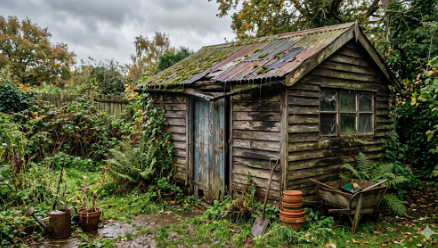
I’ve spent a bit of time lately engaging in a losing battle with a leaky garden shed. What was supposed to be a “quick win” with a bit of silicone and a few tightened bolts has instead devolved into a multi-day saga of rusted screws, rotten wood, and a vocabulary of swear words that would make a wharfie blush.
The problem is that every time I patch one hole, the structural pressure shifts and a new leak springs up two feet to the left. It is frustrating, messy, and — as it turns out — a good analogy for how we expect the government to “fix” a trillion-dollar global economy.
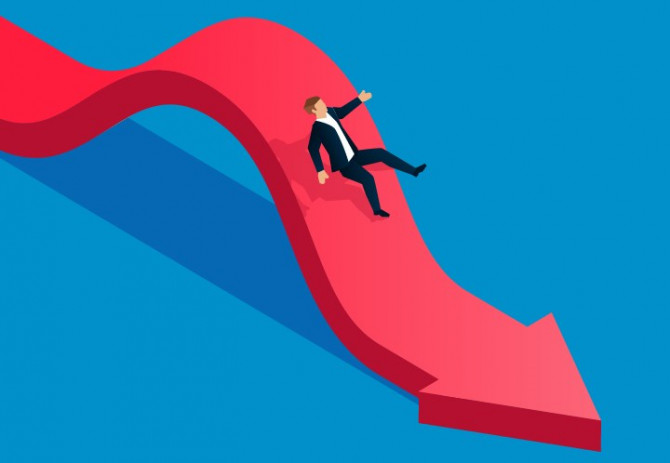
The headlines at the moment are, frankly, a bit of a bin fire. Oil prices are surging due to an ongoing war (or is it a conflict?) in the Middle East, threatening that nasty confluence of job losses and inflation that we call stagflation. This comes at a time of runaway deficit spending, mounting debt, and the very real potential of an AI-driven disruption of almost every industry.
Households are struggling, investors are hurting, and everyone is shouting at the Government to “do something!“
And it should, to the degree it can. But we should be realistic as to what, exactly, a tiny island nation with a population smaller than a mid-tier Chinese city can actually do to address the problem. Especially in the short term. At the end of the day, what we’re experiencing is a consequence of blowing up vital infrastructure and shutting a key trading route, along with the associated destruction of confidence and trust upon which all effective commerce depends.
We can nudge an incentive or redirect some tax revenue, but the reality is that no amount of Australian domestic policy settings can reopen the Red Sea, rebuild refineries, or bring about lasting peace between competing superpowers and their proxies.
What people really want, of course, is a subsidy. A fuel rebate here, a cost-of-living payment there… anything to help soften the blow. And maybe we should do those things, but we must at least acknowledge the uncomfortable truth that there is no such thing as a free lunch. Every dollar the government hands out has to be redirected, taxed, borrowed, or printed. All of these have a cost; it’s just that the cost tends to be far less visible, delayed, and spread out across society (usually in a profoundly unfair way).
You’d think that would be more obvious given our experience with COVID. Government action certainly helped us avoid a recession (as technically defined) only to thrust upon us a cost-of-living crisis in which the value of your labour and savings dropped precipitously. Again, this is not to say that the powers that be should have done nothing, only that the relief we demanded from Government didn’t come without some serious strings attached.
To make matters worse, we’re trying to solve a cost of living crisis by increasing the cost of living. The idea is that if you kneecap demand, prices should rise less aggressively. It is a bit like amputating a leg to fix an ingrown toenail; it’ll probably work, but not in the way you’d like. It sure as hell won’t do anything to address the root causes of our issues, namely war, runaway deficit spending, and highly disruptive technological shifts.
Aside from yelling at politicians and demanding better solutions (which is, actually, our civic duty), we can at least do what we can to better protect our wealth and, perhaps, find opportunity in the chaos.
The thing to remember, no matter how crazy the world gets, is that there are always things in the real world that objectively represent value. Even in a Mad Max “thunderdome” scenario, people will have needs and wants, and they will value those things that can satisfy those desires.
And what matters is not how well those things deliver for us in the next little while, but how well they do so, in aggregate, over their effective lifetime. Forecasting that over many years is next to impossible, let alone trying to figure out the next quarter, but if we can at least identify that value is being created and will continue to be for the foreseeable future, we’re moving forward on a solid foundation.
One of the things that discounted cash flow models teach you is that most of a company’s value is built on the “long tail” of future cash flows, even though they are increasingly discounted the further you look out. You notice that the cash flows from the next year or two represent only a small proportion of the total imputed value.
What I’m getting at is that things can get really bad for a business in the short run, but so long as the impacts are transient, the true value of the enterprise shouldn’t change too much — and likely a lot less than what the market reaction might imply.
That’s the superpower good investors possess: the ability to look past the immediate and consider the broader context of what a business is likely to do over its lifetime. Your job as an investor is not to guess what a company will sell this quarter, or what the market will do after a specific headline. Your job is to identify something that can deliver value in an enduring way to a growing number of people in an increasingly efficient manner. And then pay a price that reflects this, while accounting for the massive uncertainty involved.
Regardless of the current headwinds, if a company will be around in a decade’s time and earning more than it is today, you’re probably on a good thing. So that’s what you need to focus on, even in these difficult times. Especially, in these difficult times.
The sad reality is that these bigger macro forces tend to have a life of their own, and no amount of political posturing and policy fiddling in Australia is going to fix them. No more than silicone is going to address the fundamental problems with my leaky shed.
Strawman is Australia’s premier online investment club.
Members share research & recommendations on ASX-listed stocks by managing Virtual Portfolios and building Company Reports. By ranking content according to performance and community endorsement, Strawman provides accountable and peer-reviewed investment insights.
Disclaimer– Strawman is not a broker and you cannot purchase shares through the platform. All trades on Strawman use play money and are intended only as a tool to gain experience and have fun. No content on Strawman should be considered an inducement to buy or sell real world financial securities, and you should seek professional advice before making any investment decisions.
© 2026 Strawman Pty Ltd. All rights reserved.