Modern economics is littered with ideas that are, frankly, wrong. Not obviously so, which is partly why they are so hard to kill. That, and the fact they tend to be politically comforting, at least in terms of their intended outcomes.
That those outcomes would indeed be nice if achieved, and often come from the best of intentions, is not in question. But if the means by which we pursue them fail to address real-world issues — issues that cause unnecessary suffering and unfair outcomes — then they need to be questioned. Not for the sake of pushing some ideological agenda, but to ensure we actually reduce harm and avoid compounding the problems we claim to care about.
One economic sacred cow that is ripe for slaughter is the idea that governments need to “stimulate demand” whenever the economy wobbles. Indeed, the modern view seems to be that without government intervention the economy is forever at risk of collapsing in on itself.
It’s such a deeply held belief that it feels almost heretical to question it. But take a step back, strip it down to first principles, and the whole thing unravels as the nonsense it really is.
To understand why we need to go way back to 1803 and to a French economist and businessman called Jean Baptiste Say. Building on the foundational work of Adam Smith, Say observed that it was production that inherently creates the means for consumption.
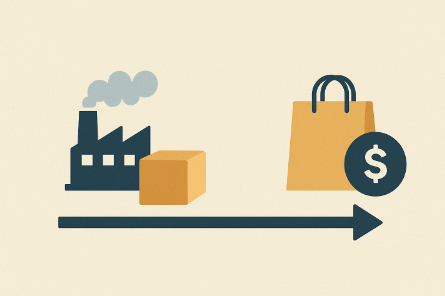
In other words, supply creates its own demand.
That’s not to say that everything that is produced will be sold, which is clearly nonsense. Not every product or service will find a buyer. No, Say’s point was more fundamental: in order to be in a position to demand something, you must first supply something else.
You can demand a good or service all you like, but without the means to pay for it, well, it’s little more than an aspirational goal. And, of course, human wants are effectively limitless, so it’s clearly not desire that constrains demand.
No, what constrains our demand — the type of demand we can realistically fulfil — is our ability to produce something valuable in the first place. That’s what gives us the means to trade for the things we want. In other words, production enables demand because it gives people the income to buy other things.
More simply: make stuff other people want and you’ll be able to buy the stuff you want.
Say was simply saying that production (ie. supply) is the necessary starting point in any functioning market. It’s what gives us the means to exchange in the first place.
Aggregate demand, therefore, is not some mysterious, separate force that must be managed. It is simply the flip side of aggregate supply. You can only consume what the economy has first produced.
That may be self-evidently true, but it’s a truism that has been forgotten, or ignored, by policymakers.
If total demand is ultimately tied to total output, then trying to stimulate consumption in isolation –especially through measures that inflate the money supply, like deficit spending — is fundamentally misguided. Without a clear link to production, such efforts only tend to make things worse.
It’s a case of putting the cart before the horse. You can pump up spending all you like, but if it’s not backed by real output, you’re just pushing more money into a system that hasn’t created more stuff. All that happens is you bid up the prices of the few goods that already exist.
Sound familiar?
This is the error of modern stimulus thinking. Policymakers see a downturn and assume the problem is insufficient demand. As if human beings have all of a sudden decided they no longer want more stuff.
(The reverse is just as absurd: if the economy’s overheating, it must be because we ordinary folk are demanding too much. Thank goodness we have an unelected council of elders to nudge us toward consuming just the “right” amount of goods and services… whatever that means.)
No, economic downturns are usually the result of prior distortions — most commonly a debt-fueled overconsumption, and a general misallocation of resources into largely unviable enterprises.
Stimulating the economy by splashing around borrowed money doesn’t fix those structural issues any more than taking painkillers cures a broken leg.
As economist Henry Hazlitt put it, “The real problem is not that people suddenly stop buying, but that they had been trying to buy more than they had produced.” That is, recessions don’t usually happen because people stop spending. They happen because people were previously consuming more than they ever truly earned.
The bust simply reveals the lie of the boom.
When Governments “stimulate demand” artificially, through further debt and monetary expansion, all it does is prevent the system from correcting a previous distortion. It only compounds the problem, even though there can be some short-term relief for those lucky enough to be the target of the stimulus.
The real tragedy is that the consequences, which always show up sooner or later, land hardest on society’s most disadvantaged. Which is why there’s a moral dimension to all of this (along with a bitter irony, given that so much of the stimulus is supposedly done in their name).
To be clear, none of this is to say that there’s never a role for government support and stimulus. But any policy that ignores the primacy of production is treating symptoms, not the causes. You cannot spend your way to wealth any more than you can eat your way to a smaller belt.
Say’s Law reminds us that prosperity comes from production. From entrepreneurship, savings, capital investment, and actual work. Not government handouts targeted at increasing consumption.
If you want more demand, build the conditions for more supply.
Strawman is Australia’s premier online investment club.
Members share research & recommendations on ASX-listed stocks by managing Virtual Portfolios and building Company Reports. By ranking content according to performance and community endorsement, Strawman provides accountable and peer-reviewed investment insights.
Disclaimer– Strawman is not a broker and you cannot purchase shares through the platform. All trades on Strawman use play money and are intended only as a tool to gain experience and have fun. No content on Strawman should be considered an inducement to buy or sell real world financial securities, and you should seek professional advice before making any investment decisions.
© 2025 Strawman Pty Ltd. All rights reserved.